
Six months ago I launched my Safer Phones Bill, with the aim of tackling the harms to children and young people caused by excessive smartphone and social media use.
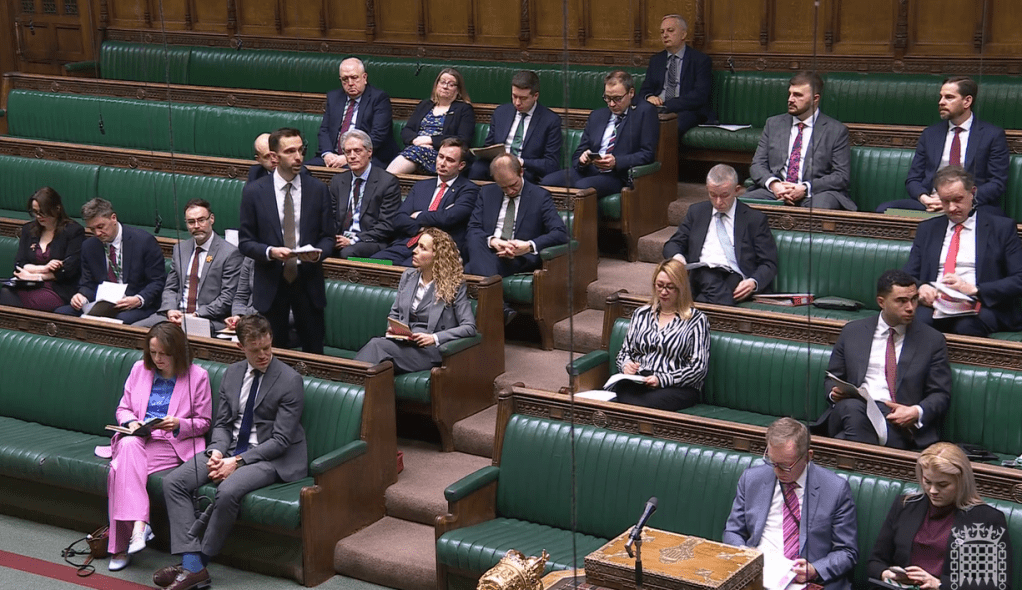
On Friday I led a debate at the second reading of my Bill in the House of Commons and was delighted that the campaign has led to the Government recognising the need to act.
I brought this forward because many of our children now spend their time captured by addictive social media and smartphone use. Often sat alone. Doom scrolling. Being bombarded by unrealistic representations of life. Today, the average 12 year old spends 21 hours a week on a smartphone – the equivalent of four full days of school teaching time.
Children are spending less time outside, less time reading, exercising, exploring, meeting people, communicating in person – all things that make childhood special and are required for healthy childhood development. That is a fundamental rewiring of childhood itself, and it has happened in just over ten years. It’s a rewiring that teachers and parents in West Cumbria tell me about on almost every visit to schools and after-school clubs.
What happened ten years ago? Smartphone and social media use became widespread. Their use has grown in parallel with a sharp increase in adolescent mental health problems and there are no other credible explanations.. There is increasing evidence of a strong association between screen time and childhood obesity and smartphone use also affects sleep, learning and development.
Other countries are taking action to address these challenges and my Bill brought the issue into the chamber of the House of Commons for the first time. I secured cross-party backing from right across Parliament.
The Bill commits the Government to come back within a year on the question of raising the digital age of consent from 13 to 16. It commits the Government to instruct the UK Chief Medical Officers to issue new guidance for parents and professionals about the impacts of excessive screen time and social media use on children. Finally, it calls on the Government to conduct more research and further develop the evidence and guidance that is important for future action.
Private Members’ Bills often have no chance of securing Government support. This Bill was drafted to secure explicit government backing – to achieve change, rather than just highlight the issue. That is why the Bill debated on Friday is narrower than where I started six months ago. I am proud to have generated a national debate which has led to the Government committing to take action.
This change will take a process of legislation rather than one big bang event. That’s why starting with these initial steps and then following them with major action will be so important.
 Josh MacAlister MP