
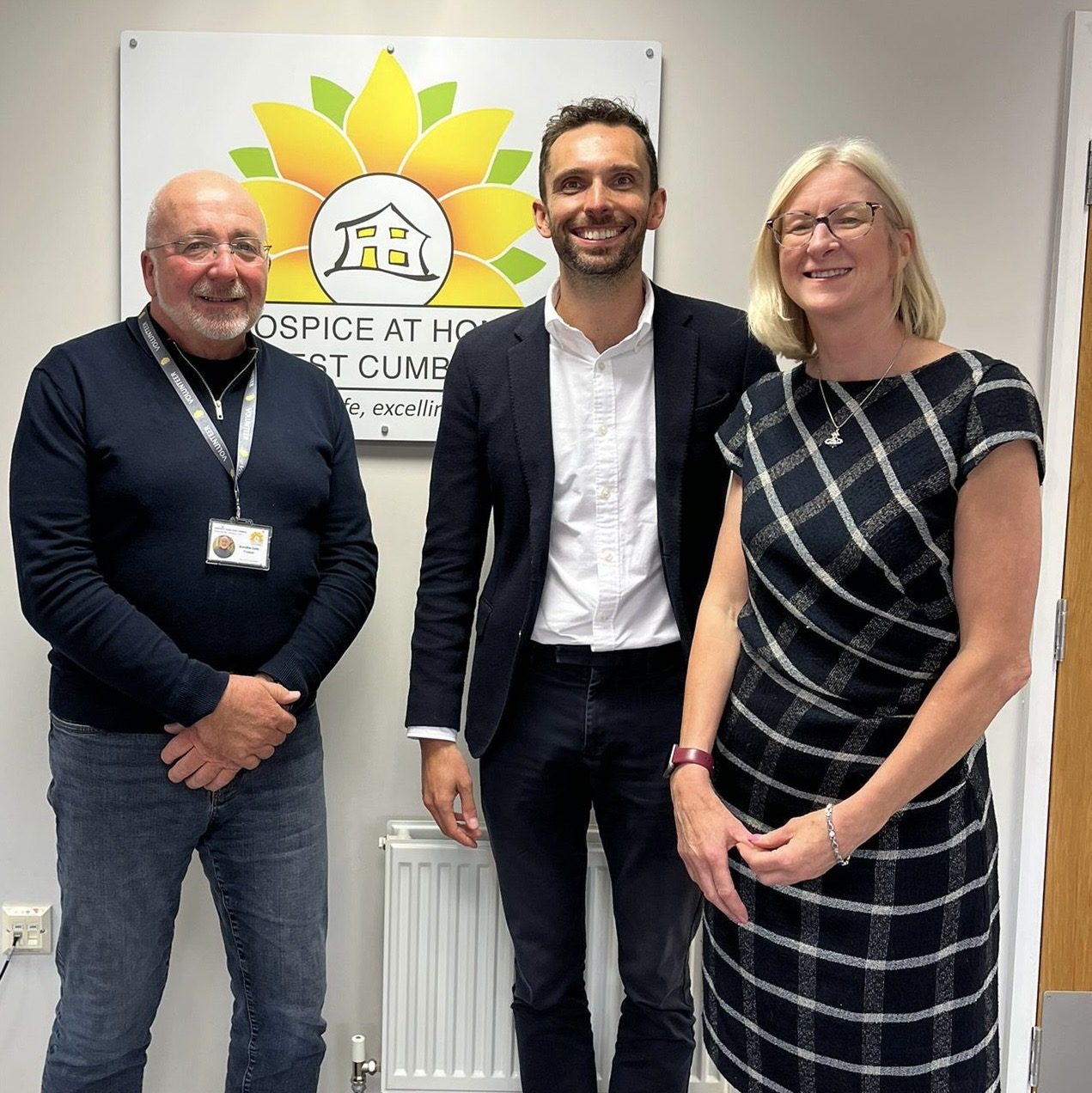
Hospice at Home West Cumbria has received £51,073 in additional government funding, helping to support the refurbishment of its new headquarters in Workington.
This funding builds on more than £100,000 of NHS capital funding allocated last year and will help create improved facilities for patients, families, staff and volunteers. The refurbishment will include new office space, a dedicated Patient Service area with treatment and therapy rooms, meeting space, and facilities for bereavement clinics – strengthening the charity’s ability to support people across West Cumbria when they need it most.
The funding forms part of a wider £25 million boost for adult and children’s hospices across the UK, confirmed by Labour’s Minister for Care, Stephen Kinnock. In total, 158 hospices are benefiting from this top-up, which will help fund urgent repairs, modern facilities, outdoor spaces and improved IT.
Across England, this brings total government funding for hospices to £125 million over the past two financial years – the largest investment in hospice care in a generation.
Josh MacAlister MP, Member of Parliament for Whitehaven and Workington, said:
“Hospice at Home West Cumbria provides vital care and support for people with life-limiting conditions and their families right across our area. Their work allows people to be cared for with dignity, compassion and respect, often in their own homes.
“I’m really pleased to see this additional funding coming to West Cumbria. The refurbishment of the new Workington headquarters will make a real difference – not just for patients and families, but for the staff and volunteers who give so much to our community.
“This investment shows how a Labour government is backing hospice care and shifting more care out of hospitals and into the community, where it often works best.”
Later this year, the Government will publish a new palliative and end-of-life care modern service framework, developed with the sector, to improve access, quality and sustainability – tackling workforce shortages, reducing avoidable hospital admissions, and addressing variations in care across the country.
 Josh MacAlister MP