
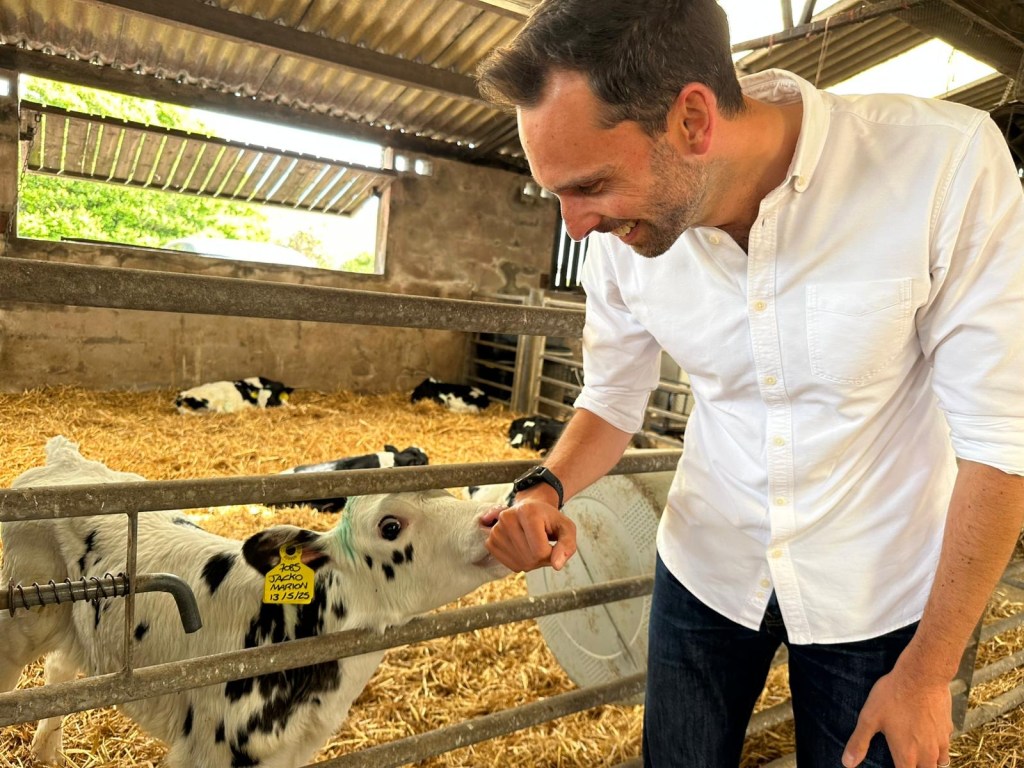
Farming is the backbone of West Cumbria – from our upland sheep farms and beef producers to dairy, mixed and growing horticulture businesses. It supports jobs, underpins our rural communities and maintains the landscapes that define our area.
That’s why the Environment Secretary’s announcement at the NFU Building Farming’s Resilience Conference this week of a £345 million package for innovation, equipment and infrastructure is so significant.
This investment is about one central principle: backing productive, profitable farm businesses while strengthening long-term resilience.
£120 Million for Innovation and Farm Technology
Productivity and environmental sustainability must go hand in hand. This package includes:
- £70 million for the Farming Innovation Programme, including £30 million for the ADOPT programme, supporting practical, farm-led R&D.
- £50 million for the Farming Equipment and Technology Fund (FETF) to help farmers adopt new technology, cut emissions and improve productivity.
The FETF will open on 17 March, with guidance now available here
For Cumbrian farms – particularly livestock and upland businesses where margins can be tight – access to modern equipment and innovation support can make a real difference to efficiency, labour pressures and long-term viability.
Government has also committed to investing at least £200 million in agricultural innovation by 2030.
That long-term signal of support is important for confidence.
£225 Million in Capital Grants
The next round of ELM Capital Grants will open in July 2026, backed by £225 million – 50% more than in 2025.
This funding will support:
- Hedgerow planting
- Water quality improvements
- Investment in livestock infrastructure
For West Cumbria, where environmental stewardship and livestock production are closely linked, this capital support can help businesses invest in practical infrastructure that strengthens both environmental outcomes and farm resilience.
A Reformed Sustainable Farming Incentive (SFI)
Many farmers have told me previous schemes were too complex, underspent and difficult to plan around. The reformed Sustainable Farming Incentive (SFI) is designed to address that.
Key changes include:
- Two application windows in 2026, with the first opening in June and prioritising smaller farms and those without existing agreements.
- A second round in September for wider applications.
- A streamlined list of actions and clearer eligibility guidance.
- A £100,000 annual agreement cap, with one agreement per farm, to ensure funding is spread more fairly.
- A minimum three-hectare eligibility threshold, aligning with recommendations from Baroness Batters’ Farming Profitability Review.
- Removal of the SFI management payment so more funding is focused directly on delivery on the ground.
For upland and family farms in West Cumbria, predictability and fairness matter. This reformed approach aims to provide greater clarity and stability, shaped directly by farmer feedback.
Strengthening the Supply Chain
A new Farming and Food Partnership Board is bringing together voices from across the supply chain – from input suppliers to processors, retailers and exporters – chaired by the Environment Secretary.
The Board will develop Sector Growth Plans, starting with horticulture and poultry, and examine barriers to growth, regulatory friction and how costs are distributed across the food chain.
For too long, farmers have felt the squeeze in the middle of the supply chain. Long-term resilience depends not just on grants, but on fairness and profitability across the system.
Animal Health and Welfare
The government has funded over 11,000 vet-led reviews for cattle, sheep and pig keepers under the Animal Health and Welfare Pathway.
There will now be consultation on making these vet visits mandatory, alongside measures to tackle BVD in cattle and PRRS in pigs, and expanded biosecurity support for poultry producers.
In a county like Cumbria, where livestock farming is central to our rural economy, maintaining strong animal health standards is critical for productivity, trade and consumer confidence.
What all this means for West Cumbria
As I’ve said consistently: food security is national security. But resilience does not happen by accident – it requires investment, partnership and long-term certainty.
This package signals:
- A shift towards clearer, more predictable schemes
- Greater recognition of the importance of smaller and upland farms
- Stronger backing for innovation and equipment
- A commitment to partnership with the sector
There is more to do – particularly around long-term budget transparency and profitability – but this represents a significant step in backing British farming.
If you are a farmer in West Cumbria and would like to discuss how these schemes may affect your business, please do get in touch with my office. I will continue working to ensure the voice of west Cumbrian farmers is heard clearly in Westminster.
 Josh MacAlister MP