
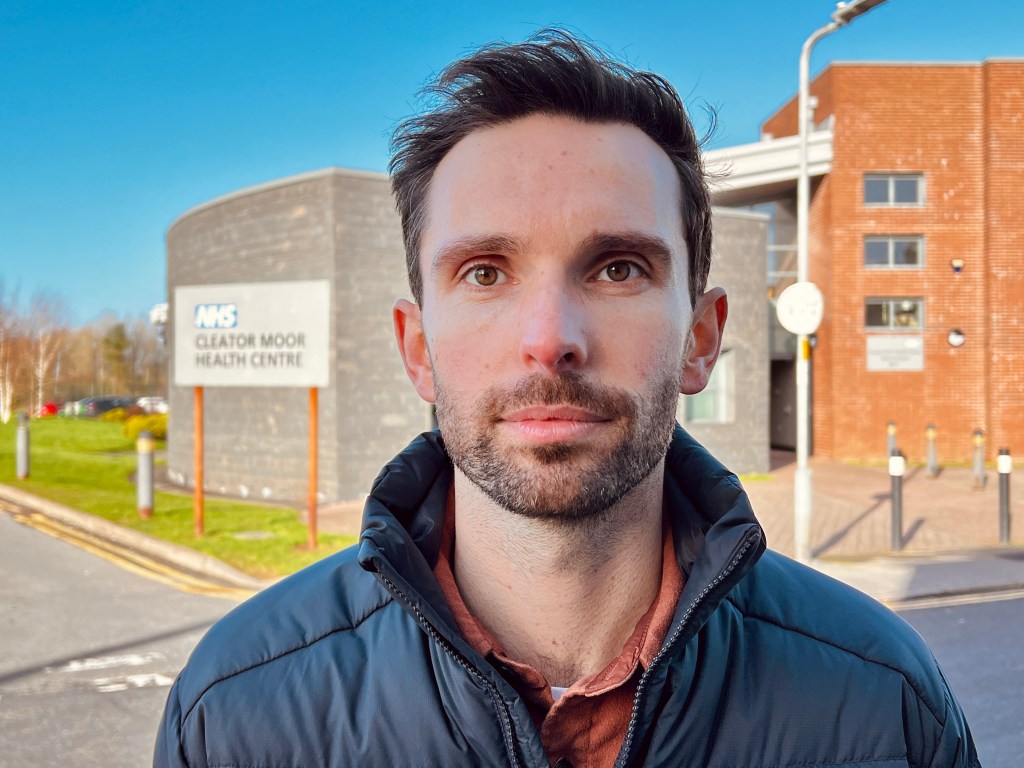
I hear on the doorstep all the time from people struggling to get an appointment with their GP. There are fewer GPs to care for a growing, ageing population with a high number of health conditions. This has knock on effects, with referral to diagnostic testing and specialist help delayed.
This is an issue across the country after 14 years of Tory government. But we face particularly acute challenges here in West Cumbria.
Labour has made building an NHS fit for the future one of the defining missions of the next Labour government and I’ve detailed Labour’s plan to reform primary care at the bottom of this page.
But we can’t wait for the next government, we need action now. Complete my survey so I have a clear picture of the current situation to make the strongest possible case for change with local and national decision makers.
Share your views
Your response will be anonymised and used to provide feedback to local GP practices and decision makers in the NHS about service improvements.


We may use the information you provide, such as name and postcode, to match the data provided to your electoral register record held on our electoral database, which could inform future communications you receive from us. We may also use your answers to help us campaign better.
If you would like to know more about how we use your information click here
Labour’s plan to build an NHS fit for the future
General practice is the bedrock of our NHS, acting as the front door of the health service. For most people, their local GP surgery is the first port of call when a health problem starts, so excellent primary care is vital. But primary care is increasingly overwhelmed and inaccessible.
Patients need new and more varied opportunities to access the healthcare they need. This will speed up patient access and free up GP time to deliver the high-quality, expert healthcare that only they can.
Reforming primary care is a core element of Labour’s mission to build an NHS fit for the future.
To make primary care fit for the 21st Century, Labour will:
- Improve GP access: Right now, people’s experience of accessing general practice is at an all-time low, and we are seeing widespread examples of GP partnerships being forced to close because fewer GPs want to take on the burden, leaving patients without access to vital services. Labour will make the future of general practice sustainable by ensuring we train more GPs, take pressure off those currently working in the system, and shift the focus of care out of hospitals and into the community. As well as this, Labour will modernise the way people book appointments to ensure that patients can easily book appointments in the manner they choose, by harnessing the power of the NHS App to end the 8am scramble, and by allowing people to book directly for routine checks like long-term condition reviews and cervical cancer screening tests.
- Bring back the family doctor: For those who would benefit from seeing the same clinician regularly (for example those living with chronic illness), Labour will improve continuity of care, which is associated with better health outcomes and fewer hospital admissions. We will support practices to effectively stratify appointments between those who need a quick opinion on a one-off health issue, and those who benefit from continuity. We will also include continuity of care in the framework used to assess the financial incentives given to GP practices.
- Join up community health and social care services: Labour will work with the NHS to bring together services in the community, learning from sites where this is already happening and working well. Labour will encourage Integrated Care Systems (ICSs) to identify opportunities to join up services, including by co-locating them on a single site where existing estate capacity allows and capitalising on the opportunity of closer working with voluntary organisations that are embedded in communities. The aim will be for more patients to have one point of contact for appointments with a range of professionals and services working together as part of a neighbourhood team, including their family doctor, carer, health visitor, physiotherapist, dentist, social prescriber or mental health specialist. This will make a particular difference to patients who have more than one condition, who often attend several very different clinics that each prescribe different medication or lifestyle changes, without co-ordination. To improve their experience of care, Labour will work towards ensuring everyone with complex multi-morbidites has a named care co-ordinator in the community who can act as a single point of contact, stopping them from being pushed from pillar to post.
- Open new referral routes: Labour will instruct the National Institute for Health and Care Excellence (NICE) to make recommendations on expanding instances where someone can refer themselves to a specialist service or diagnostic test, and on simplifying existing referral routes (building on successful single point of access programmes). For example, all patients should routinely be able to be referred directly to hospital by their optician.
- Further expand the role of community pharmacy: Whilst the Government has announced some sticking plaster proposals in this area, we will go further, accelerating the roll out of independent prescribing to establish a Community Pharmacist Prescribing Service covering a broad range of common conditions. Labour will also cut unnecessary red tape to allow pharmacy technicians to step up to some roles, ensuring pharmacists can work to the top of their license and focus on their expertise in prescribing and medicines management, rather than repetitive dispensing processes. Supported by greater digital interoperability, this will enable them to support GPs in the management of long-term conditions like hypertension and COPD and in tackling the serious issue of overprescribing, which is responsible for thousands of avoidable hospital admissions every year.
- Free-up GP appointments by boosting mental health support: Alongside recruiting thousands more mental health staff to cut waiting lists and ensure more people can access treatment, Labour will create an open-access mental health hub for children and young people in every community. We will also introduce professional support in every secondary school and bring in the first ever long-term, whole-Government plan to improve outcomes for people with mental health needs.
- Create a Neighbourhood NHS Workforce: Labour will double the number of district nurses and train 5,000 more health visitors. This will allow far more patients to be seen in the comfort of their home and provide a route to catching problems early and setting healthy habits. Doubling the number of district nurses will allow the NHS to expand ‘hospital at home’ services, like virtual wards, and they are also vital for delivering the healthcare of the future by bringing hospital standard care into the home using technology. Training 5,000 more health visitors will take pressure off GPs and A&E, end the postcode lottery families experience in getting support, improve continuity of care and ensure every child gets access to consistent healthcare.
Read Labour’s full, detailed plan to build an NHS fit for the future
 Josh MacAlister MP