MP urges residents and tourists to visit local gems during English Tourism Week

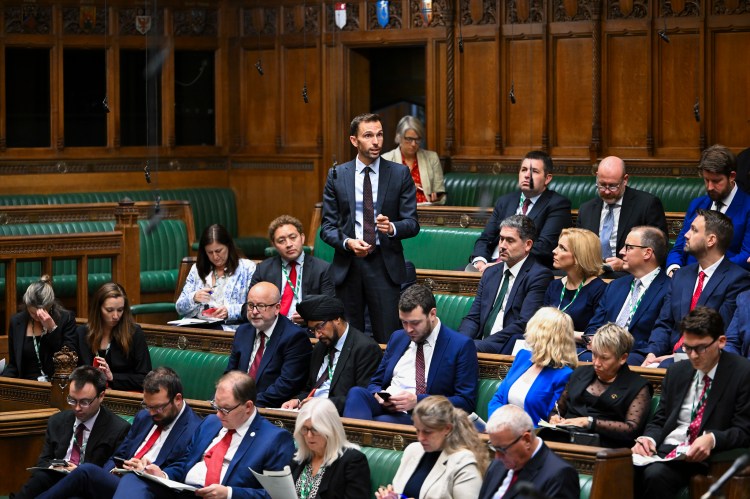
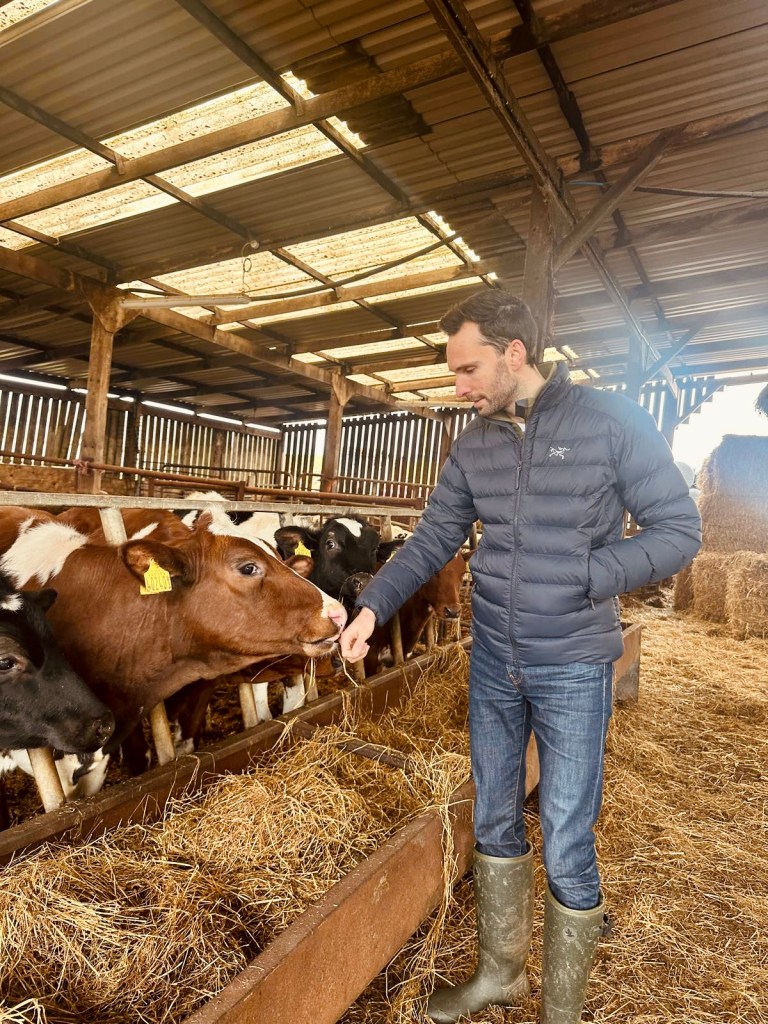
Whitehaven and Workington MP Josh MacAlister kicked off English Tourism Week over the weekend with visits to Wild Ennerdale in the Lake District National Park and the Beacon Museum in Whitehaven, West Cumbria’s civic museum.

English Tourism Week runs from 14th to 23rd March and celebrates our country’s vibrant tourism offer. Josh is using the week to highlight all that West Cumbria and the western lakes has to offer, with posts every morning throughout the week on Facebook showcasing some of his favourite local destinations.

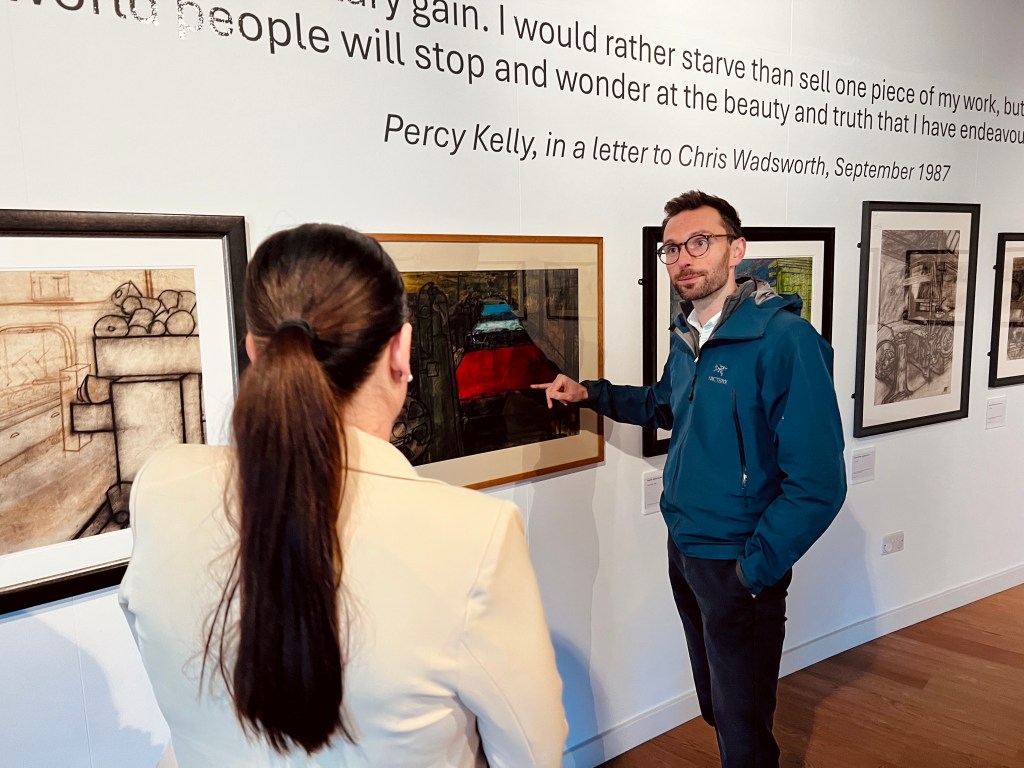
Josh visited the Beacon Museum to launch the week and saw the incredible ‘Inspired by Industry’ exhibit, featuring 11 previously unseen Percy Kelly paintings. Josh was joined by Cumberland Council and Cumbria Tourism and they discussed ways to bring more visitors to West Cumbria’s civic museum. Civic museums were given a £20 million funding boost in a recent announcement by the Government, which will benefit Tullie and the Beacon here in Cumberland.

Josh said:

“I said it in my maiden speech in Parliament and I meant it, my constituency is without a doubt the most beautiful place in the UK. The dramatic landscapes of the remote western lakes, our stunning coastline, and towns and villages with a rich and vibrant offering for residents and visitors alike. Yes we have our challenges, and I’m working hard every day to address those, but let’s talk up our community and celebrate our strengths too!

“This English Tourism Week I’m committing to working with local and national partners to do everything I can to bring more of the tens of millions of tourists who visit the Lake District every year further west to support and boost our local economy. But I also want local residents to make more use of what we have right here on our doorstep.

“So why not use this weekend to go exploring in your own neighbourhood? Take a walk in the Wasdale or Ennerdale valleys or along our stunning coast, visit a local museum or theatre and enjoy a drink and some food in one of our world-class pubs and restaurants. And then shout about it to all of your friends!”
Weekly Column – 12.03.2025 – First step to safer phones for children

Six months ago I launched my Safer Phones Bill, with the aim of tackling the harms to children and young people caused by excessive smartphone and social media use.

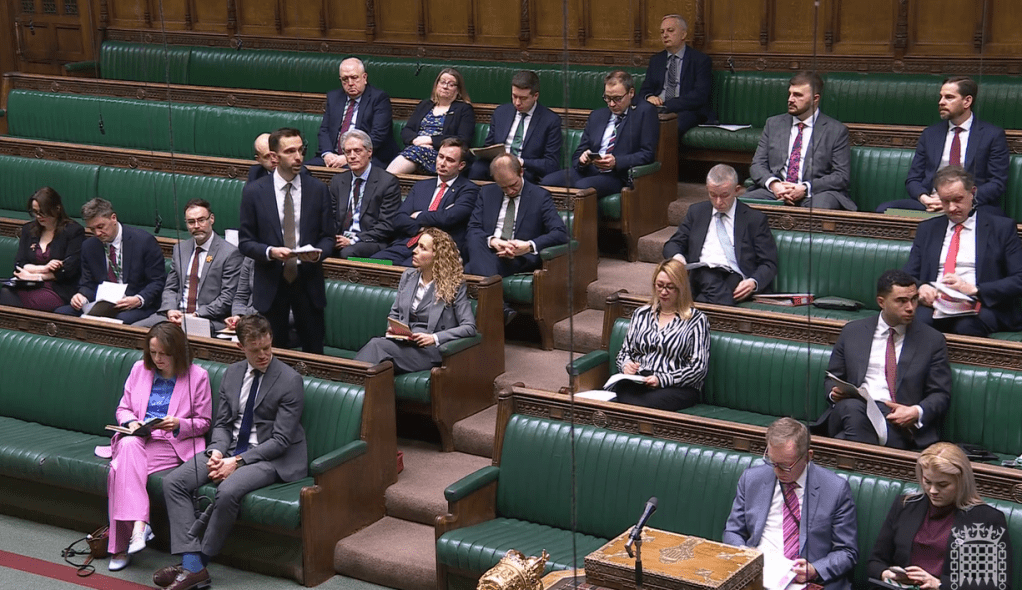
On Friday I led a debate at the second reading of my Bill in the House of Commons and was delighted that the campaign has led to the Government recognising the need to act.

I brought this forward because many of our children now spend their time captured by addictive social media and smartphone use. Often sat alone. Doom scrolling. Being bombarded by unrealistic representations of life. Today, the average 12 year old spends 21 hours a week on a smartphone – the equivalent of four full days of school teaching time.

Children are spending less time outside, less time reading, exercising, exploring, meeting people, communicating in person – all things that make childhood special and are required for healthy childhood development. That is a fundamental rewiring of childhood itself, and it has happened in just over ten years. It’s a rewiring that teachers and parents in West Cumbria tell me about on almost every visit to schools and after-school clubs.

What happened ten years ago? Smartphone and social media use became widespread. Their use has grown in parallel with a sharp increase in adolescent mental health problems and there are no other credible explanations.. There is increasing evidence of a strong association between screen time and childhood obesity and smartphone use also affects sleep, learning and development.

Other countries are taking action to address these challenges and my Bill brought the issue into the chamber of the House of Commons for the first time. I secured cross-party backing from right across Parliament.

The Bill commits the Government to come back within a year on the question of raising the digital age of consent from 13 to 16. It commits the Government to instruct the UK Chief Medical Officers to issue new guidance for parents and professionals about the impacts of excessive screen time and social media use on children. Finally, it calls on the Government to conduct more research and further develop the evidence and guidance that is important for future action.

Private Members’ Bills often have no chance of securing Government support. This Bill was drafted to secure explicit government backing – to achieve change, rather than just highlight the issue. That is why the Bill debated on Friday is narrower than where I started six months ago. I am proud to have generated a national debate which has led to the Government committing to take action. 

This change will take a process of legislation rather than one big bang event. That’s why starting with these initial steps and then following them with major action will be so important. 

Cumbrian MPs demand action from phone companies to improve connectivity

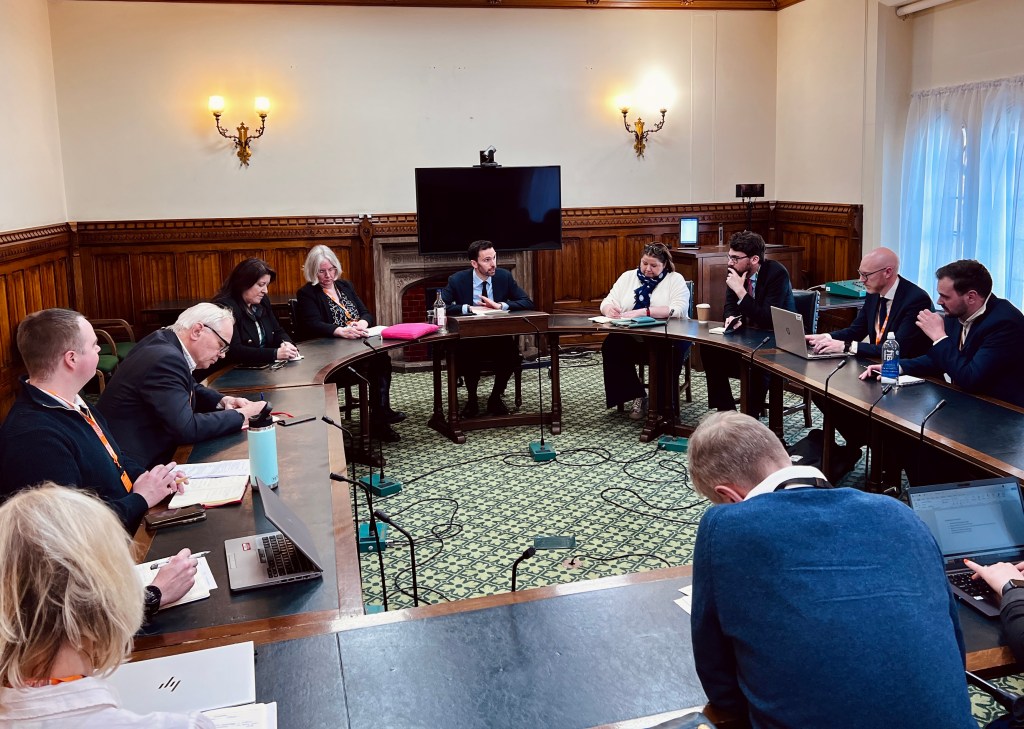
Cumbria’s four Labour MPs called electricity, telecoms and mobile network providers into Parliament to demand further action from them to improve the resilience of the network following weaknesses exposed during recent storms.

The meeting, convened by Whitehaven and Workington MP Josh MacAlister, was led by MPs Julie Minns, Markus Campbell-Savours and Michelle Scrogham and Cumberland councillor Gillian Troughton. Electricity North West, Ofgem, BT / EE, Virgin Media O2, Vodafone and Three were all in attendance.

Storm Eowyn saw thousands of homes across Cumbria without power. Mobile phone masts were also affected as many do not have back up power. In areas where home phones have been switched to digital, customers had no access to mobile or landline communications, leaving them unable to get updates or seek help.

MPs asked telecoms providers to do more to support vulnerable customers who have had their landlines switched over to digital and called on mobile network operators to put battery back up units on more of their masts across Cumbria. MPs also asked operators to set aside generators for masts during power cuts. Concerns were raised about the lack of data sharing so that vulnerable customers can be identified by providers and network operators. Electricity North West also raised issues about not having data on mast locations for their network restoration planning during power cuts.

Speaking after the meeting, Josh said:

“MPs called this meeting because we don’t think enough is being done to improve connectivity in rural areas of Cumbria or to respond quickly when issues occur, such as power cuts.

“We were clear that we want telecoms providers and mobile network operators to step up and invest in improving the resilience of the network, with things like battery back up at masts and more effort to identify and support vulnerable customers. We also want to see more data sharing across the system. This should be happening already.”

MPs will convene a further meeting in three months to check on progress.

Cumbrian MP’s landmark Bill shifts Government position

A Bill put forward by Whitehaven and Workington MP Josh MacAlister to tackle the harms caused to children and young people by excessive smartphone and social media use shifted the Government’s position in Parliament this week.

Josh MacAlister’s ‘Safer Phones Bill’ had its second reading in Parliament on Friday. It was the first time the issue of excessive smartphone and social media use by children has been debated in the House of Commons in this Parliament.

The Bill commits the Government to come back within a year on the question of raising the digital age of consent from 13 to 16. It commits the Government to instruct the UK Chief Medical Officers to update and reissue guidance for parents and professionals about the impacts of excessive screen time and social media use on children. Finally, it calls on the Government to conduct more research and further develop the evidence and guidance that is important for future action.

The average 12 year old now spends 21 hours a week on a smartphone. That is the equivalent of four full days of school teaching time per week. 93% of 12-15 year olds are active social media users. For 76% of 11-18 year olds, most of their free time is now spent on screens. 

Josh MacAlister called this “a fundamental rewiring of childhood itself”. Children are spending less time outside, less time reading, less time exercising, exploring, meeting people, communicating in person – all the things that make childhood special. And things that are required for healthy childhood development. 

Friday sittings in Parliament are usually very quiet, but dozens of MPs from all parties returned to Parliament to speak in the debate and support the Bill. 

Responding on behalf of the Government, Digital Minister Sir Chris Bryant MP commended Josh for bringing the Bill forward and leading the debate. The Minister agreed that excessive smartphone usage is detrimental to the physical, mental and spiritual health of children and young people and confirmed that the Government intends to deliver on the recommendations made in the Bill. Summing up, he said “There is no option of inaction for this House or for this country. There has to be action.”

Speaking after the debate, Josh said:

“When I launched my Safer Phones Bill last year I said it was the start of a debate and a campaign of persuasion. Over the last few months, we’ve had a very lively national debate and persuaded many people that it is time to act on the negative effects of excessive screen time and social media use on children’s health, sleep and learning.

“Private Members’ Bills often go nowhere and so from the start my focus has been on securing government support for action. The final Bill I published last week was one I was hopeful the Government would back and I’m pleased that the Government indicated that it will act on the measures in the Bill. 

“This will be the first meaningful step from the UK Government to engage with the widespread impacts of excessive smartphone and social media use by children. But it must not be the last step.”

Weekly Column – 05.03.2025 – Secure at home, strong abroad

Last week marked the third anniversary of Russia’s illegal invasion of Ukraine. I was reflecting on my conversations with Ukrainian women and children displaced here to West Cumbria to escape the war. Many have sons and husbands serving on the front line. They don’t know if they’ll ever see their loved ones again.

Nigel Farage and Putin’s cheerleaders in Reform UK parrot Kremlin talking points blaming the West for ‘provoking’ this war. But the blame lies squarely with Vladimir Putin. Reform UK claim to be patriots but don’t stand with our country in its defence of the British values of freedom and democracy that many west Cumbrians fought and died for during WWII.

Resolving the Ukraine crisis through protecting its sovereignty is imperative for European security. The UK has stood shoulder-to-shoulder with Ukraine and I was very proud to see Prime Minister Keir Starmer welcome President Zelenskyy to Downing Street as a friend and ally this weekend.

But Russian aggression in Ukraine is just one facet of the threat we are dealing with. We are facing a once-in-a-generation moment for the collective security of our country and our continent. Global instability, increasing threats from malign actors, climate change and rapid technological disruption have all contributed to a rapidly deteriorating security landscape. 

Labour Governments have always stood up to keep Britain safe. Just as our predecessors stood with Churchill through the Second World War, created NATO and won the peace, we will provide the response this moment demands.

As a leading European power, the UK must step up to safeguard continental security on an enduring basis. That is why we are delivering our manifesto commitment to increase defence spending to 2.5% of GDP by April 2027 – with an ambition to reach 3% in the next parliament as economic and fiscal conditions allow.

This will deliver the biggest sustained boost to defence spending since the Cold War, safeguarding our collective security and funding the capabilities, technology and industrial capacity needed to keep the UK and our allies safe.

We have to pay for that increase and we’ve been crystal clear that we won’t hike taxes on working people or return to austerity. That left us with the difficult but necessary decision to fund it by temporarily reducing overseas aid from 0.5% to 0.3% of Gross National Income (GNI). This is a difficult choice but it is one that reflects the evolving nature of the threat and the need to shift our focus from soft to hard capability, whilst upholding fiscal discipline. 

We will meet the growing threats of this new era by making Britain secure at home, and strong abroad.

My letter to the Times & Star – 05.03.2025

In his recent letter, the former Conservative candidate for Penrith and Solway, Mark Jenkinson, complained that he’s not getting credit for investment in the Port of Workington. 

I’ve no doubt that Mark tried his best to secure funding for the town before deciding he had a better chance of getting elected up the road and abandoning Workington.

It was indeed the Conservative government which awarded £4.5 million to do remediation work on land at the Port. I acknowledge and thank the previous government for that. But all that money does is allow the council to get land at the Port ready for future opportunities. It is necessary but in no way sufficient to create jobs, bring investment or stimulate our economy.

Those are the things I’m aiming to bring through the Port Taskforce I lead with the council. We’re developing an ambitious Masterplan to upgrade and expand the Port. A Masterplan that would involve at least ten times the levels of investment that Mark Jenkinson is so keen to celebrate. The National Wealth Fund set up by the Labour Government could be the route to help us deliver this major expansion. If we get this right it could attract new clean energy projects,advanced manufacturing and create over 1,000 jobs.

Rather than twhining about not getting credit for a small handout after 14 years in government, I would encourage local Tories to back Labour’s ambition for our area. Surely it would be better for West Cumbria if we could work on big projects like this on a cross party basis. 

Government announces raft of new policies and major investment to boost profits for farmers in West Cumbria

  • Environment Secretary announces reform package to boost farmers’ profitability as part of the Plan for Change
  • Government extends seasonal worker scheme for next five years
  • Major £110m investment in farm equipment and research projects

New reforms to make farming more profitable were announced this week by the Secretary of State for Environment, Food and Rural Affairs Steve Reed.

Speaking to farmers at the NFU conference in Westminster, Steve Reed revealed new plans to deliver a profitable farming sector, while reaffirming Government’s cast iron commitment to food production, and unlocking rural growth.

The speech announced a raft of new policies to put money into the pockets of British farmers including:

Extending the Seasonal Worker visa route for five more years giving farms a pipeline of workers and certainty to grow their businesses. Annual quota reviews will ensure we strike the right balance – supporting farms while gradually reducing visa numbers as we develop alternative solutions.

  • Back British produce: British farmers handed a major boost under new requirements for government catering contracts to favour high-quality, high welfare products that local farms and producers are well placed to serve. The move marks a major leap in achieving the government’s ambition for at least 50% of food supplied into the £5 billion public sector catering contracts to be from British producers or those certified to higher environmental standards
  • £110 million investment in technology: The Farming Innovation Programme which supports research and development of agri-technology for farmers, for example the chemical free cleaning for integrated milking equipment, which lowers energy costs and chemical use. The Farming Equipment and Technology Fund provides grants of up to £25,000 to buy new equipment such as electric weeders to reduce chemical use.
  • Protecting farmers in trade deals: The government will uphold and protect our high environmental and animal welfare standards in future trade deals.
  • Strengthening Britain’s biosecurity: Setting up a new National Biosecurity Centre to transform the Animal and Plant Health Agency animal health facility at Weybridge, investing £200 million to improve our resilience against animal disease to protect farmers and food producers.

Speaking about profitability, Steve Reed, Secretary of State for Environment, Food and Rural Affairs said:

“The underlying problem is that farmers in West Cumbria do not make enough money for the hard work and commitment they put in.

“I will consider my time as Secretary of State a failure if I do not improve profitability for farmers across the country.

“My focus is on ensuring farming becomes more profitable because that’s how we make your businesses viable for the future. And that’s how we ensure the long term food security this country needs.”

This builds on the commitments made at the Oxford Farming Conference, where the Environment Secretary set out the government’s vision for farming including:

  • Using planning reforms to support food production: Ensuring our reforms make it quicker for farmers to build the buildings, barns and other infrastructure they need on their farms to boost food production.
  • Diversifying income streams: Helping farmers make additional money from selling surplus energy from solar panels and wind turbines by accelerating connections to the grid, supporting them during difficult harvests and supply shocks.
  • A fair supply chain: Boosting profitability through fair competition across the supply chain. New rules for the pig sector will come this spring, ensuring contracts clearly set out expectations and changes can only be made if agreed by all parties. Similar regulations for eggs and fresh produce sectors will follow with the government ready to intervene with other sectors if needed.

Josh MacAlister MP says:

“After 14 years of the Conservatives failure, this Labour Government is backing west Cumbrian farmers.

“The measures above, coupled with the increase in payment rates for those on Higher Level Stewardship agreements and the one year extension of the Farming in Protected Landscapes (FiPL) programme with a £30 million boost, will boost the profits of farmers in West Cumbria.”

Weekly Column – 26.02.2025 – Rebuilding local government

One of the most brutal consequences of more than a decade of Conservative austerity is the effect it has had on local services delivered by councils. 

While demand has risen, a quarter of council funding from government has been cut in real terms since 2010 under the Conservatives. Council tax has become a bigger and bigger slice of the funding pie to plug the gap and stop services collapsing completely. 

Fifteen years after austerity cuts began we can see the consequences all around us; Sure Start centres gone, libraries closed or scaled back, roads in a worse state and charges introduced for things you used to get for free. The legacy is enormous pressures on budgets for care for the elderly, support for the disabled and for children with special educational needs and disabilities (SEND) and children in care.

Ever the opportunists, local Tories are slamming Labour for the current situation. But they have very short memories. In 2020, Conservative led Allerdale Council announced in its budget press release that “The budget has been set in the climate of continued financial pressures for local authorities… the amount it [Allerdale Council] receives in government grants has dropped by 96 per cent since 2013/14.”

The truth is this is now a problem that needs fixing, rather than a political football to be kicked. Conservative run councils are in exactly the same position and are making the same decisions to increase council taxes or make brutal cuts to local services like waste collection, road repairs and social care. As the Conservative deputy leader of Lancashire County Council said last year when setting their last budget under a Conservative government: “Whilst the Government has increased funding in some areas, the hard truth is that it is simply not enough to plug the gaps we have in our budget”.

We finally have a government committed to building back up our local services and Cumberland has done well from Labour’s settlement. Overall, Cumberland has received a 6% boost to its core spending power, including a record £13 million for local public health initiatives, an extra £7 million for roads, £5 million to support local bus services, a further £652,000 for disabled facilities grants and a share of the government’s £1 billion boost to SEND support.

In addition, the government is giving Cumberland access to £23.5 million extraordinary financial support, along with 29 other councils of all political stripes, to support its recovery, protect local services and avoid the need for higher council tax rises.

I’m not here to defend the council. I will represent the interests of my constituents without fear or favour, regardless of who is in charge locally or nationally. Cumberland needs to spend extra money wisely to stabilise council finances, deliver good quality public services and invest in improving our communities. I know Labour councillors are committed to those goals and they have my support to deliver.

MP gets crafty at West House Pottery on eve of breaking ground

Whitehaven and Workington MP Josh MacAlister put his pottery making skills to the test on a visit to West House Pottery in Workington.

The Pottery is a not for profit social enterprise run by West House, Cumbria’s leading care and support provider for children, young people and adults with learning difficulties. Josh visited West House Pottery on the eve of ground being broken for the construction of the new Hall Garden facility, due to be completed later in 2025. 

Josh had the chance to meet staff and service users and see some of the fantastic pottery made there, which is available to buy online. He also got the chance to try out his pottery making skills.

Josh also visited Cafe West in Whitehaven for lunch. Cafe West is another West House social enterprise which provides invaluable work experience and training opportunities for young people and adults with learning disabilities.

Josh said:

“West House does such important work with young people and adults in West Cumbria and it is always a pleasure to visit one of their enterprises to meet the brilliant staff and service users and see firsthand the great work they’re doing.

“Unfortunately, I think if politics doesn’t work out for me I don’t have a budding career ahead as a potter – I’ll leave that to the experts at The Pottery!

“I encourage all residents to support their work by giving them your custom. Pop in to Cafe West in Workington or Whitehaven for lunch and go buy some pottery!”

Jodie Grainger, Developing Manager at West House, said:

“Thank you to Josh MacAlister for visiting us at West House Pottery! It was a pleasure having him explore our creative space and enjoy a bit of pottery. We appreciate his support and hope he found some inspiration during his time with us. He’s always welcome back!”

Weekly Column – 19.02.2025 – Nothing patriotic about Reform’s pro-Putin energy plan

Energy bills for heating homes and powering businesses are some of the highest in the world. Speeding up the transition to homegrown clean power – nuclear and renewables – is the best bet for creating new jobs and bringing down bills. 

Which is why I was struck by seeing Reform UK’s new energy policy launched last week. Under the guise of banishing the bogeyman of ‘net zero’, Reform proposes turning away from the global shift to homegrown, cheap, clean energy and back to oil and gas. They claim this would bring bills down but the opposite is true.

It doesn’t matter where they are produced, oil and gas are traded on a global market and prices are set globally. We learnt this under the Tories, who left the UK enormously exposed to energy shocks by selling off our gas reserves and holding back rapid construction of new nuclear and renewables. The new Labour government is acting fast to reduce our dependence on petro-states and dictators like Putin, but Reform would roll that back.

Perhaps Reform’s policy is no surprise given that Nigel Farage openly admires Vladimir Putin and describes him as a victim of the West. Reform’s energy policies would be a form of surrender to Putin and they would undermine our own energy independence. What is surprising is that Reform would take this position when they know it would mean higher energy bills for homes and businesses. 

Just as damaging however are Reform’s proposals for new taxes on renewables and higher fees for grid connections. This would hit bills and jobs by making it more costly to build and deliver clean, cheap, homegrown energy at a time when we’re seeing record levels of investment in energy infrastructure in this country, creating tens of thousands of jobs.

Despite claiming to be pro-nuclear, Reform’s plan would choke off a nuclear industry which is just now starting to build back after collapsing under the Conservatives. 

So the consequences of Reform’s energy plan are clear: a hit on consumers through higher bills, less investment and jobs in the UK, knocking confidence on nuclear and offering a gift to Putin and other foreign actors.

It’s a pro-Putin energy plan which will hit our bills hard. There’s nothing patriotic about that. 

Labour’s plan isn’t ideological, it’s pragmatic. We want clean, cheap, homegrown energy instead of reliance on hostile states and volatile global prices.

As your MP, I’m working hard to ensure we feel the benefits of that here in West Cumbria, through investment in new nuclear and clean energy projects and attracting the jobs that could power.