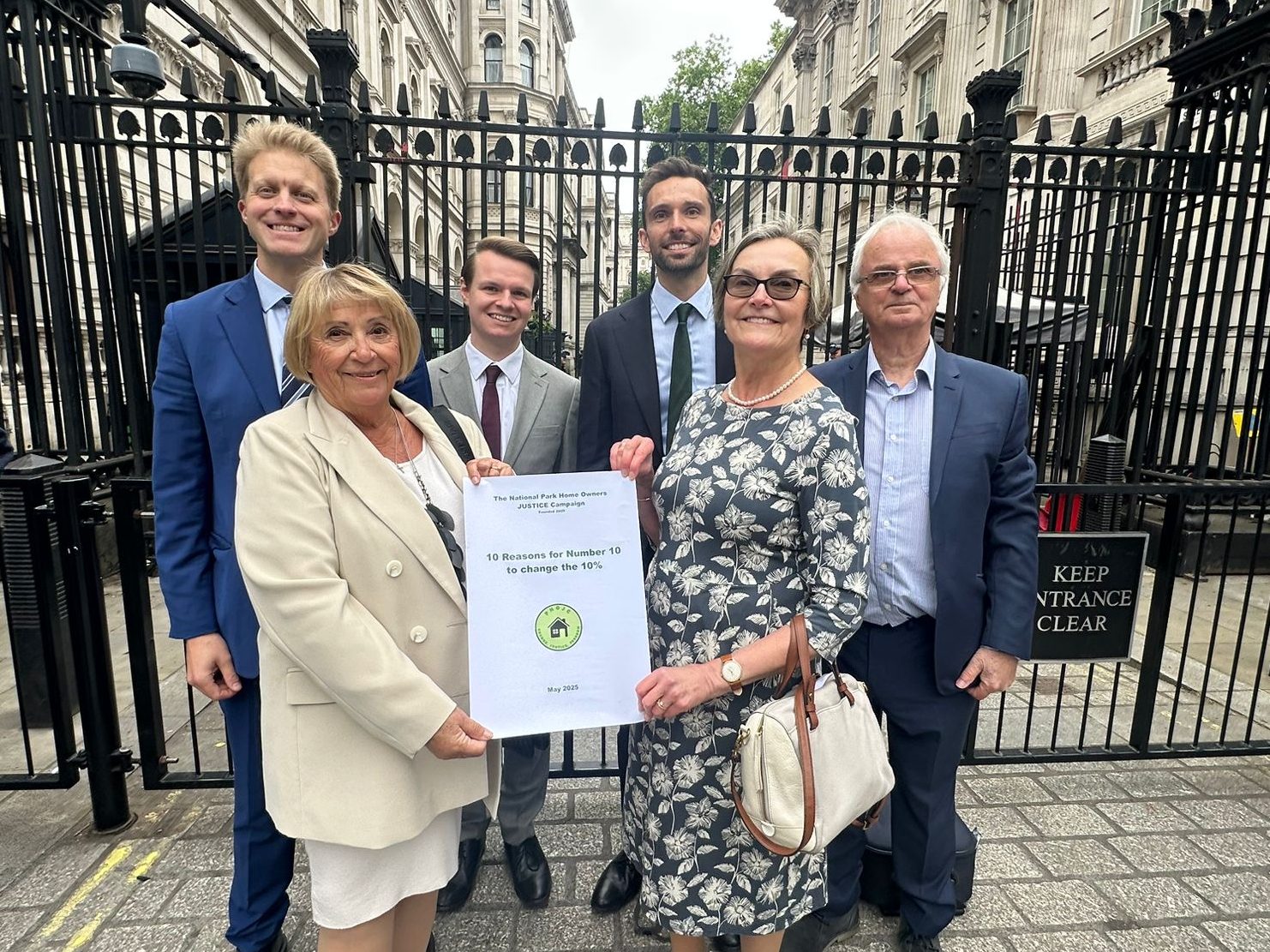

Whitehaven and Workington MP Josh MacAlister has welcomed the Labour Government’s announcement that ground rents will be capped at £250 a year, calling it a “long overdue step that will make a real difference to leaseholders in West Cumbria.”
The Government confirmed the cap as part of a wider package of measures.
Josh MacAlister MP said the change will bring relief to families who have faced unfair and escalating charges for years:
“I have met many local residents who have been ripped off for far too long. This cap will save some families hundreds of pounds a year and finally puts an end to one of the worst injustices in the leasehold system.”
The MP also welcomed the Government’s commitment to ban new leasehold flats, delivering on Labour’s manifesto pledge to bring to an end the outdated leasehold model.
Josh added: “This important action to support leaseholders with the cost of living comes after years of inaction and neglect from the Conservatives. Both the Tories and Reform opposed our legislation. This is change that only a Labour Government can bring about.”
Alongside the cap, the Government has published the draft Commonhold and Leasehold Reform Bill, which will strengthen the rights and protections of more than five million leaseholders. The Moving to Commonhold consultation has also opened, giving people the chance to shape the next phase of reform.
The announcement also builds on the recently passed Renters Rights Act and Labour’s landmark planning reforms, aimed at ensuring everyone has a safe and secure home.
Josh said:
“This is fantastic news for leaseholders in West Cumbria who have been trapped in an unfair system for too long. I am proud that a Labour Government has delivered where the previous Tory Government failed.
“When I stood to be your local MP in July 2024, our manifesto promised this reform, and I’m delighted this protection for leaseholders is being brought about with Labour.”
Cumberland’s Nuclear Future Board and union representatives of Sellafield’s workforce meet to discuss Pioneer Park
– Advanced Nuclear Framework to support delivery of new nuclear at Pioneer Park, creating jobs and accelerating local growth
West Cumbria is set to play a leading role in the UK’s next generation of nuclear power, following the publication today of the Government’s new Advanced Nuclear Framework.
The Framework provides a clear route to market for advanced nuclear projects and is expected to accelerate the delivery of new nuclear at Pioneer Park, supporting high-quality jobs, clean energy and long-term economic growth for the area.
Pioneer Park has already been identified by government as a priority site for advanced nuclear development, and work is now underway locally to take the project forward. Development of a masterplan for the site will begin this month, funded by the Nuclear Decommissioning Authority and co-ordinated by local partners and guided by the Cumberland Nuclear Future Board.
The Prime Minister backed our plan for Pioneer Park last summer following a meeting with Josh
The Advanced Nuclear Framework introduces a national pipeline of credible projects and a dedicated “concierge-style” support service for developers, helping them navigate planning, regulation and financing. For Pioneer Park, this creates a tailor-made process to select the right development partner and move more quickly from ambition to delivery.
Josh MacAlister MP said:
“This Framework is a major step forward for West Cumbria. It gives us the backing we need from government while putting local leadership firmly in the driving seat.
“Pioneer Park has huge potential, and this new approach allows us to move faster, attract serious private investment, and deliver new nuclear that works for our community. This is about jobs, skills, and securing West Cumbria’s future at the heart of the UK’s clean energy system.”
Cumberland’s MPs and Cllr Mark Fryer following a meeting with Energy Secretary Ed Miliband to secure his backing for Pioneer Park
Advanced nuclear technologies, including small and advanced modular reactors, are manufactured in factories and assembled on site, allowing projects to be delivered more quickly and at lower cost. They can supply clean power to the grid or directly to industry, supporting growing demand from sectors such as manufacturing and data centres.
Michael Pemberton, Chief Executive of BEC, which led the market engagement exercise for Pioneer Park and will deliver the masterplan for the site, said:
“The Advanced Nuclear Framework aligns strongly with the work already underway in West Cumbria. We are co-ordinating the development of a masterplan for Pioneer Park that is ambitious, deliverable and rooted in local strengths. The government’s pipeline and developer support give us the confidence to engage the market in a structured way and bring forward a project that delivers real economic value for the area.”
West Cumbria has one of the UK’s most experienced nuclear workforces and a long-established supply chain. The Framework builds on that strength by helping credible projects unlock private investment, while ensuring value for taxpayers and billpayers.
Josh speaking at a BECBC energy event to promote the plan for Pioneer Park
Dianne Richardson, Chief Executive of Britain’s Energy Coast Business Cluster, said:
“This is exactly the kind of clarity the nuclear industry has been asking for. The Framework provides confidence to developers and investors and it plays to West Cumbria’s unique capabilities.
“Pioneer Park represents a pivotal opportunity for West Cumbria as by anchoring new nuclear here we sustain our skilled workforce and create new opportunities for businesses across the region. This in turn supports a resilient local economy and secures benefits that will be felt by families and communities for decades to come.”
Josh chairing a meeting of the Cumberland Nuclear Future Board in Parliament with Energy Secretary Ed Miliband and local leaders
NDA Group CEO, David Peattie, said:
“Decommissioning is the foundation of the nuclear sector, and our unique expertise, resources and assets support the UK’s energy security ambitions and drive progress towards net zero. That includes identifying land not required for our core mission which could instead be released to deliver long term benefits for local communities and the wider economy.
“Our £1 million investment in developing the Pioneer Park clean energy masterplan reflects that commitment – helping to stimulate economic growth, create skilled jobs and deliver benefits for the community for generations to come.”
The Chancellor announced the Pioneer Park project during the Spending Review in 2025
Sue Ferns, Senior Deputy General Secretary at Prospect, said:
“Next generation nuclear technology, like small and advanced modular reactors, provide an exciting opportunity to capitalise on the UK’s nuclear heritage and lead the way in pioneering new approaches, so it is welcome that government is acting to accelerate development with this Framework.
“Prospect will work with government and industry to ensure that the sector continues to create good, unionised jobs, and to develop the skilled workforce needed to power an expanded nuclear sector.”
Josh hosting Nuclear Week in Parliament 2026, where Pioneer Park was showcased
The project at Pioneer Park will be led locally through the Cumberland Nuclear Future Board, working in partnership with government, industry and the local supply chain. The aim is to ensure that development reflects local priorities while benefiting from national support.
Developers will be able to apply to join the national advanced nuclear pipeline from March. Successful projects will receive in-principle government endorsement and access to support to help bring schemes forward at pace.
When I travel around West Cumbria, I’m always struck by the same thing: the strength of our communities, and the quiet commitment of people who step up for others without fuss or fanfare. Foster carers are among them.
Every day, foster families across the country open their homes to children who have already experienced more disruption than any child should. They provide stability, care and a sense of belonging – often at short notice, and often while juggling work, family life and the complexities of the care system. They don’t do it for recognition. But they do deserve our backing.
That’s why I’m proud this week as Children’s Minister to launch the Government’s new Fostering action plan – to renew fostering, support carers properly, and make sure more children can grow up in loving family homes, close to the people and places that matter to them.
This is not a new concern for me. Before I became an MP, I led the Independent Review of Children’s Social Care. I heard again and again that while foster care delivers better outcomes for most children than institutional settings, the system around carers was too often fragmented, bureaucratic and unsupportive. Carers told us they felt trusted with children’s lives, but not trusted with everyday decisions. They spoke about inconsistent support, long delays, and a sense that the system was working around them rather than with them.
Now, as Minister for Children & Families, and with the full backing of this Labour Government, I’m able to put many of the recommendations from my review into action in this action plan.
The new Fostering action plan will expand fostering and strengthen support for carers. It commits to creating homes for 10,000 more children in foster care, backed by £88 million over the next two years. That includes investment to help experienced carers create extra space at home – keeping brothers and sisters together and offering more long-term stability for children who need it.
The plan also focuses on retention, not just recruitment. We’re expanding regional fostering hubs so carers get consistent support from first enquiry through to long-term care. We’re expanding peer support, including the Mockingbird model – which I’ve seen working well firsthand here in West Cumbria, led by foster carers Ian and Alex – so carers are not left isolated. And we’re simplifying the rulebook – cutting unnecessary bureaucracy and giving carers the authority to make everyday decisions that help children feel part of normal family life.
For me, renewing fostering is about something simple but powerful: loving relationships. Stable, loving relationships are what help children recover, grow and thrive. Our job, as a government, is to build a system that makes those relationships possible – and sustainable.
In Cumbria and across England, foster carers are already changing lives. This plan is about making sure the system finally works for them, and for the children who rely on them.
Josh MacAlister, Labour MP for Whitehaven and Workington and Minister for Children and Families, has today set out how the Government’s new Fostering Action Plan will strengthen support for foster carers and help more children grow up in stable, loving family homes in Cumbria and across the country.
Fostering is the bedrock of the care system, with around two-thirds of children in care living with foster families. But the number of foster carers has fallen in recent years while the number of children needing care has continued to rise, putting pressure on local services and leading to instability for children.
The Government’s Fostering Action Plan will end this decline and create foster homes for 10,000 more children. This is backed by £88 million over the next two years, alongside reforms to recruitment, retention and support for carers.
In Cumbria, where foster carers already play a vital role in supporting children who cannot live with their birth families, the plan will help ensure more children can stay close to home, experience fewer moves, and grow up with the stability that family life provides.
Josh MacAlister said:
“Foster carers make a really important contribution in our society. They provide children with safety, stability and a sense of belonging at moments of real vulnerability.
“When I led the Independent Review of Children’s Social Care, foster carers were clear about what needed to change: better support, less bureaucracy, and a system that treats them as trusted partners.
“This Fostering Action Plan will deliver that change – renewing fostering so more children can grow up in loving family homes, and making sure carers have the backing they deserve.”
Cllr Emma Williamson, Deputy Leader of Cumberland Council and Cabinet Member for Children’s Services, Family Wellbeing and Housing, said:
“Foster carers across Cumberland play an extraordinary role supporting children and young people, often in very challenging circumstances. We know that when children can grow up in stable, loving family homes close to their communities, outcomes are better.
“This plan gives councils the backing we need – with clearer national direction, investment, and a focus on retaining and supporting foster carers. Working in partnership with government, we’re committed to strengthening fostering locally and making sure carers feel valued, supported and trusted.”
The plan includes:
A national fostering recruitment and awareness campaign
Up to £25 million to help experienced carers adapt or expand their homes, increasing capacity and helping keep siblings together
£12.8 million to expand Regional Fostering Hubs into an end-to-end model, supporting carers from first enquiry through approval and into ongoing support
A national fostering innovation programme to develop and scale new models of care
Stronger training and support for carers, including another 100 Mockingbird peer-support groups
Fairer and more transparent handling of allegations, with clearer expectations of support for carers during investigations
A simpler rulebook and an “opt-out” approach to delegated authority, allowing carers to make everyday decisions for the children in their care more easily
Hospice at Home West Cumbria has received £51,073 in additional government funding, helping to support the refurbishment of its new headquarters in Workington.
This funding builds on more than £100,000 of NHS capital funding allocated last year and will help create improved facilities for patients, families, staff and volunteers. The refurbishment will include new office space, a dedicated Patient Service area with treatment and therapy rooms, meeting space, and facilities for bereavement clinics – strengthening the charity’s ability to support people across West Cumbria when they need it most.
The funding forms part of a wider £25 million boost for adult and children’s hospices across the UK, confirmed by Labour’s Minister for Care, Stephen Kinnock. In total, 158 hospices are benefiting from this top-up, which will help fund urgent repairs, modern facilities, outdoor spaces and improved IT.
Across England, this brings total government funding for hospices to £125 million over the past two financial years – the largest investment in hospice care in a generation.
Josh MacAlister MP, Member of Parliament for Whitehaven and Workington, said:
“Hospice at Home West Cumbria provides vital care and support for people with life-limiting conditions and their families right across our area. Their work allows people to be cared for with dignity, compassion and respect, often in their own homes.
“I’m really pleased to see this additional funding coming to West Cumbria. The refurbishment of the new Workington headquarters will make a real difference – not just for patients and families, but for the staff and volunteers who give so much to our community.
“This investment shows how a Labour government is backing hospice care and shifting more care out of hospitals and into the community, where it often works best.”
Later this year, the Government will publish a new palliative and end-of-life care modern service framework, developed with the sector, to improve access, quality and sustainability – tackling workforce shortages, reducing avoidable hospital admissions, and addressing variations in care across the country.
Families in Workington are set to benefit from a new government-funded breakfast club at Northside Primary School, announced as part of the next phase of the national rollout.
The programme will ensure pupils can start the school day with a healthy breakfast in a calm, supportive environment – helping children to be ready to learn and giving parents greater peace of mind at the start of the day.
Josh MacAlister MP welcomed the announcement, highlighting the practical difference the scheme will make for local families.
“A good start to the day makes a real difference,” Josh MacAlister said.
“For too many families, mornings are a rush and the cost of living continues to bite. Breakfast clubs are a simple, sensible way to support children while also easing pressure on parents.”
The breakfast club at Northside Primary School will be funded by the government and delivered by the school, ensuring children have access to nutritious food before lessons begin. Evidence from existing programmes shows that breakfast clubs can improve attendance, behaviour and attainment, particularly for pupils who need extra support.
Josh MacAlister MP added:
“This is about backing working families and giving every child the chance to thrive, whatever their background. I’m pleased to see Northside Primary included in this next phase and will continue to work locally to make sure children in Workington get the support they deserve.”
500 schools across the country will get new breakfast clubs from April. The rollout forms part of the government’s wider commitment to improve child wellbeing and reduce barriers to learning across the country.
Whitehaven will have access to a wider set of face-to-face banking services after Cash Access UK confirmed that a Banking Hub is coming to the town.
The announcement follows the decision by Santander to close its Whitehaven branch, which had been the last remaining high street bank in the town. The new Banking Hub will provide counter services, cash access and in-person support for customers of multiple banks, helping residents and businesses continue to bank locally.
The news marks the success of a sustained campaign led by Josh MacAlister MP, working alongside local councillors and the community. Josh raised the issue directly in Parliament in September 2024 and wrote three times to Ministers, pressing the case for Whitehaven and highlighting the impact the loss of banking services would have on residents and the local economy.
Josh MacAlister MP said:
“The loss of Santander is unfortunate but the Banking Hub is fantastic news for Whitehaven and a really important win for our community.
“I raised the need for a Banking Hub in Parliament, wrote repeatedly to Ministers and worked closely with local councillors and residents to make the strongest possible case. This announcement shows that persistence pays off.
“A Banking Hub means people will still be able to access cash, speak to someone face to face from their own bank and get the support they need without travelling miles. I’m delighted that Whitehaven will once again have proper banking provision.”
Local councillors also welcomed the announcement, saying it would make a real difference to residents and businesses.
Councillors Emma Williamson, Joe Ghayouba and Jeanette Forster said in a joint statement:
“This is excellent news for Whitehaven and a testament to what can be achieved when a community comes together. The loss of the last high street bank caused real concern for residents and local traders.
“A Banking Hub will help protect access to essential services, support our town centre and ensure that people who rely on in-person banking are not left behind. We’re pleased to see the case for Whitehaven recognised and approved.”
Further details on the location and opening date of the Banking Hub will be confirmed in due course by Cash Access UK. Josh will be meeting Cash Access UK in Parliament this week to push for the Banking Hub to open as quickly as possible.
Local sports clubs across West Cumbria are being encouraged to work together to bid for a share of millions of pounds in new government funding to upgrade grassroots sports facilities.
The funding forms part of a £400 million UK-wide commitment to grassroots sport facilities announced in the June 2025 Spending Review. Nearly 1,000 projects across the UK have already benefited, with investment delivering new and refurbished all-weather pitches, floodlighting, changing pavilions and community sports hubs.
A further £85 million will be available in 2026/27, with £68.35 million allocated to England and delivered through the Football Foundation. Applications in England are now open on an ongoing basis.
The investment is targeted at communities with the greatest need. At least 50 per cent of funding is directed to the 30 per cent most deprived communities, with projects expected to improve access to sport for women and girls, disabled people and young people. At least 40 per cent of funded projects must offer multi-sport provision, supporting activities such as rugby and cricket alongside football.
Josh MacAlister, MP for Whitehaven and Workington, said the funding represented a major opportunity for West Cumbria – but stressed that collaboration between clubs would be key to success.
“Grassroots sport is one of the best investments we can make in our communities – for young people, for physical and mental health, and for bringing people together,” he said.
“What funders are really keen to see are strong, well-prepared bids that show partnership working and wide community benefit. In West Cumbria, we have brilliant clubs doing fantastic work, and by working together – across different sports and communities – we can put forward bids that stand a much stronger chance of success.”
Josh has been bringing local sports clubs together to help them prepare for bids, share ideas and explore joint applications, including projects that deliver shared facilities or co-ordinated multi-sport provision.
He also confirmed he will be meeting with Cumberland Council and the Football Foundation to discuss how local partners can work together to ensure West Cumbria is well placed to benefit from the funding.
“I’m very happy to support local clubs with their bids – whether that’s helping make connections, raising issues with funders, or strengthening the case for investment locally,” he added.
“This is about making sure West Cumbria gets its fair share and that our facilities are fit for the future.”
Projects eligible for funding include new or refurbished artificial grass pitches, floodlighting to extend opening hours, upgraded changing facilities to support women’s and girls’ participation, and facilities that can be used by schools, health initiatives and the wider community.
Clubs, community groups and schools can apply through the Football Foundation. Further guidance is available at footballfoundation.org.uk.
The government has announced a significant package of support for pubs and music venues across West Cumbria, cutting business rates, reforming licensing rules and setting out a new High Streets Strategy to help local hospitality businesses thrive.
Pubs play a vital role in communities across West Cumbria, providing jobs, supporting local supply chains and acting as important social hubs. However, the sector has faced sustained pressure in recent years, with rising costs, changing consumer habits and the long-term impact of the pandemic.
Under the new package, pubs will receive a 15% cut to new business rates bills from April, followed by a two-year real-terms freeze. The government will also launch a review into how pubs are valued for business rates, responding to long-standing concerns raised by the sector.
As a result, the average pub is expected to save around £1,650 in 2026/27, with around 75% of pubs seeing their business rates fall or stay the same. By 2029, the pub sector as a whole will be paying 8% less in business rates than it does today.
The announcement comes alongside confirmation of a new High Streets Strategy, to be published later this year, aimed at supporting retail, leisure and hospitality businesses and strengthening town centres in places like Whitehaven, Workington, Egremont and Cleator Moor.
Commenting on the announcement, Josh MacAlister MP said:
“Pubs are at the heart of towns and villages across West Cumbria. They support local jobs, bring people together and help keep our high streets alive.
“This package is about giving pubs some breathing space – cutting business rates, reducing red tape and backing them to plan for the long term. It’s a practical step to support local businesses and the communities that rely on them.”
The government has also confirmed £10 million in funding for the Hospitality Support Fund over three years, which will help pubs provide additional community services, including cafés, village stores and family-friendly spaces, and support people furthest from the labour market into hospitality jobs.
As part of licensing reforms, pubs and other licensed venues will be able to open later for Home Nations’ matches during the later stages of this summer’s Men’s FIFA World Cup. Further consultations will look at allowing later opening for major events, as well as increasing the number of temporary events pubs can host.
The package builds on the £4.3 billion of support announced at Budget 2025, including a cap on business rate bill increases and a permanent 5p cut to the business rates multiplier for retail, hospitality and leisure businesses.
The government has also committed to consulting in the spring on loosening planning rules for pubs, making it easier for them to expand, add guest rooms or adapt their premises to meet local needs.
Josh meeting with Rail Minister Lord Hendy in Parliament in December
The Cumbrian Coast Line is not just a way of getting from A to B; it is a lifeline for communities, workers, students and visitors, and a strategic asset for our country. That is why, since being elected, I have made securing a major upgrade to the line one of my top priorities.
For too long, plans to improve the railway gathered dust. The business case for investment sat on a shelf for years, while passengers put up with unreliable services and slow journeys. One of my first actions as your MP was to get the funding and get that business case updated, unlocking progress that had been stalled for far too long.
But paperwork alone doesn’t move trains. Over the last year I have chaired multiple meetings with the Rail Minister and brought together officials from across government to focus on the Cumbrian Coast Line. This has included serious work to explore funding options that reflect the line’s national importance, not least because of the significant nuclear and defence interests it serves alongside everyday passenger services.
The most urgent next step is reopening Bransty tunnel. West Cumbrians know all too well the consequences of short-term fixes. Patch-and-mend repairs over many years are precisely what led us to the closure we face today. That is why I’ve been clear that reopening Bransty tunnel must not mean another temporary job but a full upgrade of the line through the tunnel, built to last for decades. Done properly, this can be the first phase of a wider transformation of the route.
I am confident that this argument has been heard in government. In the coming weeks, an announcement will be made on the work required to reopen Bransty tunnel, and I hope residents will be happy with the outcome.
Looking beyond the tunnel, the next big prize is a full signalling upgrade along the line. On its own, modern signalling would deliver significant improvements to reliability and journey times, making daily travel easier for passengers and giving freight and strategic users the capacity they need. Securing funding for this work in the next Spending Review is a key objective, and one I am pursuing relentlessly.
To keep momentum going, I will shortly host the next roundtable bringing together Cumbrian leaders and the Rail Minister. These discussions matter. They ensure that decisions taken in Westminster are grounded in the reality of life in West Cumbria and focused on long-term solutions, not quick fixes.
This is not an overnight job, and I won’t pretend otherwise. But after years of drift, there is now real progress, real engagement from government, and a clear plan for what comes next. I will keep fighting to make sure the Cumbrian Coast Line finally gets the investment it deserves.