Josh discussing energy bill support with Energy Minister Martin McClusey
This week brings some welcome news for households across West Cumbria. Government action has led to a cut in the energy price cap, which came into force on 1st April, meaning lower bills for all families on mains electricity and gas – saving the average household around £150.
This protects your bills for the next three months from rising costs as a result of the US/Israeli war in the Middle East.
Alongside that blanket support, additional targeted help is now available for those who rely on heating oil, thanks to £370,000 from the Government for Cumberland Council’s Crisis and Resilience Fund. Around 1,000 families most in need will be able to access hundreds of pounds to pay for heating oil.
This is part of a bigger picture too. With this additional funding, the Government is providing £4.5 million this year for Cumberland’s Crisis and Resilience Fund and more than £12 million over the next three years – providing a stronger safety net for people facing hardship. That’s a significant step forward in ensuring no one is left behind when costs rise unexpectedly.
The approach to this fund is straightforward: prioritising those already known to be on lower incomes, while also ensuring that other struggling households can access support through a simple application process. It’s about making sure help reaches people fairly, without unnecessary barriers.
While this week’s changes will ease pressure, I know many families are still feeling the strain after a difficult few years. Lower bills through the price cap will help, but the reality is that affordability remains a real concern for many households.
Let me be clear – as the Prime Minister has also made clear – we will take further action in the coming months if the situation continues to worsen, in order to protect you and your family. Events are moving quickly and it would be wrong to make decisions now when things could change considerably in a matter of days. But contingency planning is underway and if the conflict in the Middle East continues and energy prices remain high into the autumn, further support will be considered for those who need it most.
Existing planned support this winter will also help. Most pensioners will still receive the winter fuel allowance of up to £300 and thousands more west Cumbrians will have £150 taken off your bills through the Warm Homes Discount, which we’ve now funded for the remainder of this Parliament.
I’m your voice in Government so if there is anything I can help you with, please don’t hesitate to contact me and I’ll do my best to support you.
Josh presenting his Safer Phones Bill in Parliament
Families across Cumbria will benefit from new government guidance to help parents manage screen time for young children, Children and Families Minister and local MP Josh MacAlister has said.
The new guidance, published last week, gives clear, practical and non-judgemental advice to parents of under-fives – helping families navigate one of the biggest challenges of modern parenting.
Josh MacAlister, MP for Whitehaven and Workington and Minister for Children and Families, said:
“Parents across Cumbria have told me how difficult it can be to get the balance right with screen time – especially with so much conflicting advice out there.
“As a local MP, I’ve been working closely with parents, experts and schools on how we better support families in a digital age.
“That’s why I’m proud the government is publishing this new guidance – practical, evidence-based advice developed with over a thousand parents to help families feel more confident in the choices they’re making.”
The guidance includes simple steps such as avoiding solo screen time for under-twos, limiting screen use to around an hour a day for 2–5 year olds, choosing slower-paced and age-appropriate content, and prioritising shared activities like reading, play and conversation.
It comes as evidence shows that while screens are part of everyday life for young children, excessive screen use – particularly alone – can impact early language, social and emotional development.
Josh has been a leading voice pushing for action to tackle the harms caused to children and young people by excessive screen time and social media use. His Safer Phones Bill committed the government to action last year.
Josh MacAlister MP added:
“This guidance is just one step.
“We’re taking wider action – including our ongoing national consultation on children’s online safety – looking at measures like a minimum age for social media, stronger protections from harmful content, and new safeguards around emerging technologies.
“We are absolutely clear: we will not leave parents to navigate this alone.
“I’ll continue working both locally and in government to make sure families in Cumbria have the support they need – every step of the way.”
The new guidance is part of the government’s broader “Best Start in Life” programme, alongside the rollout of Best Start Family Hubs, bringing advice, services and community support closer to families.
There’s a simple question I’ve been focused on since being elected: how do we unlock the full potential of the Port of Workington for our town?
Because the truth is, we already have the foundations. A strategic location on the west coast, deep-water access, rail and road connectivity, and a workforce with real industrial strength. This is a port with the capacity to be a catalyst for growth.
But potential on its own doesn’t create jobs or bring investment. It takes a plan – and a relentless focus on delivery.
That’s why one of the first things I did as your MP was bring together partners to form a Port Taskforce with Cumberland Council, industry and government. The aim was straightforward: move beyond ambition and start building a credible, investable pipeline of projects.
Working closely with Cumberland Council – as the port’s owner and harbour authority – we secured funding to develop a Strategic Outline Business Case. That work has now been completed and sets out a clear vision: by 2040, a thriving clean energy, manufacturing and logistics hub right here in Workington.
But this is not the end of the process – it’s the beginning of the next phase.
Cumberland Council has now commissioned Mott MacDonald to take that initial work further and turn it into something investors and government can back with confidence: detailed, investable propositions that can unlock major upgrades to the port’s infrastructure and capability.
Alongside this technical work, I’ve been making the case directly in Westminster. We’ve brought senior Ministers to the Port and Taskforce meetings to see the opportunity first-hand. We’ve also engaged the National Wealth Fund to position our port as a serious candidate for long-term public and private investment.
Why does this matter? Because the scale of opportunity is significant.
We’re talking about supporting offshore wind in the Irish Sea, strengthening our role in nuclear logistics linked to Sellafield, and creating new opportunities in hydrogen, clean fuels and advanced manufacturing. The port already sits at the heart of these sectors – we now need to scale it up.
We’ve also made real progress on the basics: improving road access, unlocking land for development, and investing in facilities that make the port more competitive. These are the building blocks investors expect to see – and we are putting them in place. And exciting prospects are already in development for new facilities in or near the Port that will create jobs – I hope to be able to say more on those very soon.
None of this happens overnight. But what I want residents to know is this: we now have momentum.
A clear plan. Strong local partnership. Engagement at the highest levels of government. And a growing pipeline of projects that can bring jobs, growth and long-term investment to Workington. The future is bright for the Port of Workington!
Right to maintain contact with siblings to be strengthened in law for children in care via amendment to Children’s Wellbeing and Schools Bill
New requirement will help some of the most vulnerable children in our country to maintain vital family relationships
Amendment passed in House of Lords on evening of Wednesday 25th March, with final decision in the Commons expected after Easter
Children in care will be better supported to build and maintain relationships with their brothers and sisters under new measures brought forward in law by the government, making life better for vulnerable children and ensuring they have the opportunity to get on in life.
All local authorities in England and Wales will be required to promote and facilitate contact for children in care who are separated from their siblings. This change puts sibling contact on an equal footing with parental contact – recognising the vital role these relationships play in providing stability, continuity and emotional support.
Currently, sibling relationships are not prioritised as much as parent relationships for children in care by local authorities. Many care-experienced people have talked about the difficulties of losing contact with siblings as a result of being placed in care, and the long term impact this can have.
The new legislation will ensure that local authorities will do all they can to provide sibling contact, even if, for instance, they are living a long way away from each other. This includes half and step siblings.
It will apply unless it is not in children’s best interests, such as in cases of violence or abuse or where social workers have other concerns about wellbeing.
Children’s Minister Josh MacAlister said:
“It’s a travesty that children in care can end up losing contact with their brothers and sisters when they go into care, and we want that contact be maintained wherever possible for the sake of their emotional stability and their futures.
“Every child’s circumstances are different, but this amendment is aimed at making life better for more vulnerable children and giving them the best possible start in life.”
Chris Hoyle, who was in the care system as a child, said:
“After being initially separated, being reunited with my brother in the same foster placement changed my life. My brother is the longest relationship I have ever had, by some distance. How do you define the value of that? How do you put a price on still being in contact with the person who loved you first? I can’t.
“Jonny is a rock in my life. A 6’2 rock who supports the wrong football team. He keeps me grounded in my identity and provides a safety net that has lasted a lifetime.
“The Department for Education once called us ‘The Hoyle Brothers’. We are a package deal thanks to the bravery of senior staff who decided that sharing a bedroom was not worth losing something that cannot be bought.
“Wherever it is safe and possible, the relationships of siblings in care should be a priority. Those relationships can last a lifetime and are priceless.”
Parice, who has experienced the care system, said:
“Sibling relationships are often built on a strong foundation of support, offering both emotional reassurance and practical help throughout life.
“For those who have experienced the foster care system, these bonds can be especially significant, providing a vital sense of belonging in times of uncertainty. Shared history and memories create a unique connection, alongside similarities that can feel unlike any other relationship.”
The amendment to the Children’s Wellbeing and Schools Bill was welcomed in the House of Lords on Wednesday 25th March, following continued discussions with stakeholders and parliamentarians. Final confirmation is expected following further debate in the House of Commons after Easter.
This change forms part of the government’s wider work to reform children’s social care and ensure that every child has the opportunity to grow up in a stable, loving environment.
This includes work to reduce care placements far from home, and allocating £10.8 million for an expansion of Regional Care Co-operatives to enable better placement planning for children in care.
The DfE is also supporting more siblings in care to stay together with ambitious plans to create 10,000 more foster care places, backed by a total investment of £88m, including £25m to expand existing foster carers’ homes so they can foster more children, including sibling groups.
This is on top of £2.4 billion of investment in the Families First Partnership Programme to help keep families together through early intervention, a pilot for financial support for kinship carers, and reforms to support for adoptive families.
Cathy Ashley, Chief Executive of Family Rights Group, said:
“Growing up alongside brothers or sisters is a fundamental part of childhood that so many of us take for granted. Yet, for too long, our care system has overseen a quiet injustice that the wider public rarely sees: breaking the links between siblings, often when they need one another the most.
“By tabling this amendment, the Government is finally righting this historic wrong. When we provide young people with the right scaffolding, we set them up for a lifetime of success, and sibling bonds are the very foundation of that support. This is a victory for care-experienced young people to ensure our system actively protects the relationships that matter most.”
Anela Anwar, Chief Executive of Become, said:
“We’re delighted the government has agreed to change the law to better protect relationships between children in care and their siblings.
“Too often, children are separated from their brothers and sisters, with little done to maintain those relationships. This change will strengthen duties on local authorities to keep siblings connected and better protect these vital bonds.”
The amendment is part of the government’s landmark Children’s Wellbeing and Schools Bill which is the most transformative piece of child protection legislation in a generation and will put children at the centre of education and social care.
The government will continue working with the sector to support implementation, share best practice, and ensure children across the country benefit from stronger, more stable care arrangements.
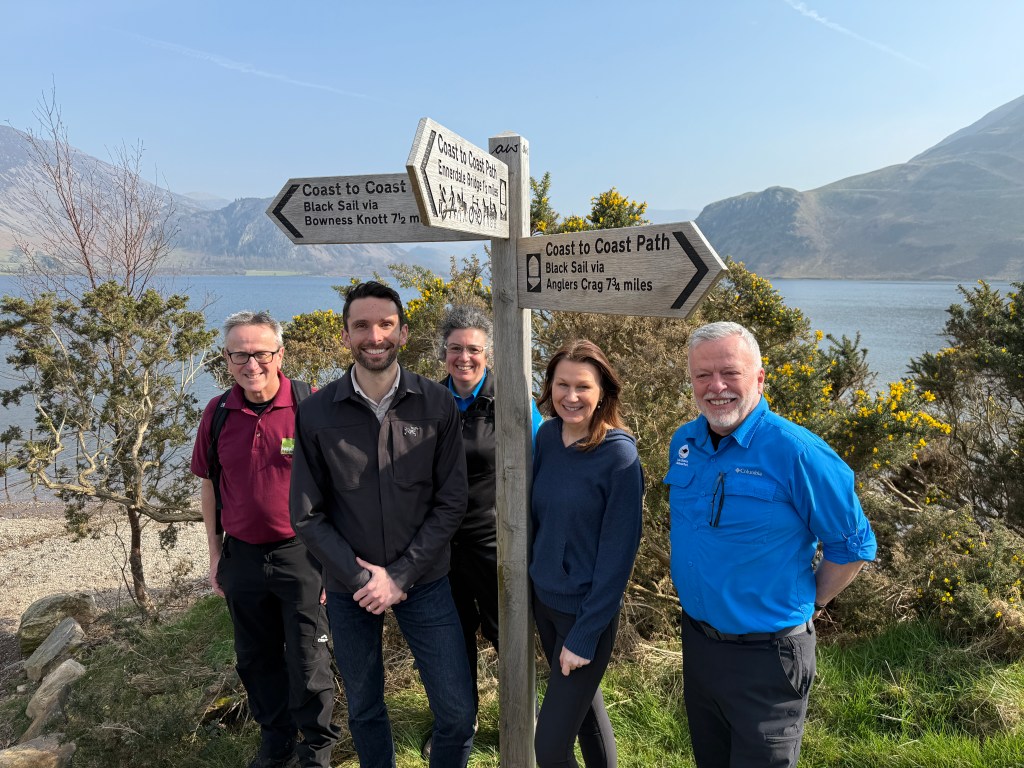
Josh MacAlister MP with Access Minister Baroness Sue Hayman on the newly designated C2C National Trail at Ennerdale Water
Access Minister Baroness Hayman and Josh MacAlister, MP for Whitehaven and Workington, launched the new Coast to Coast National Trail with a special walk at Ennerdale this week.
The Coast to Coast Path – first devised by Alfred Wainwright – has now been formally upgraded to National Trail status, becoming one of England’s premier long-distance routes and the first National Trail to pass through the Lake District.
The 190-mile route stretches from St. Bees on the Irish Sea to Robin Hood’s Bay on the North Sea, taking in some of the country’s most iconic landscapes. The Cumbrian section begins along the coastline before heading inland through Cleator Moor and Ennerdale, and across the fells towards Shap.
The upgrade follows a £5.5 million investment to bring the route up to National Trail standard, including improved accessibility, upgraded paths and bridges, and consistent, high-quality signage. The trail will also benefit from dedicated funding for ongoing maintenance, ensuring it can be enjoyed for generations to come.
Josh MacAlister MP said:
“Today marks a hugely significant moment for our area and for the Lake District. The Coast to Coast is one of the UK’s most iconic walks, and it’s fantastic to see it officially recognised as a National Trail.
“Starting at St. Bees and passing through communities like Cleator Moor and Ennerdale, this route showcases the very best of West Cumbria. It’s not just about stunning scenery – it’s about supporting local businesses, boosting tourism, and helping more people connect with nature.
“I was delighted to have Minister Hayman join me at Ennerdale to celebrate this milestone and to see first-hand the improvements that have been made to make the trail more accessible to everyone.”
Access Minister Baroness Hayman said:
“The Coast to Coast National Trail showcases some of the very best of England’s landscapes, and the Lake District section is truly spectacular. This investment means more people than ever can enjoy these incredible places, with improved paths and signage helping them explore safely and sustainably. We are proud to support a trail that connects communities, boosts local economies, and protects our natural environment for future generations.”
More than 6,000 people complete the full Coast to Coast route each year, with many thousands more walking sections of it. The trail plays an important role in supporting local economies, with the vast majority of walkers using local food, accommodation and other services along the way.
The designation of the Coast to Coast Path as a National Trail places it alongside some of England’s most celebrated walking routes and marks a major milestone for the Lake District, which has not previously had a National Trail.
The launch at Ennerdale forms part of a wider week of celebrations organised by Natural England to mark the official opening of the route.
Josh MacAlister MP and Julie Minns MP with Health Secretary Wes Streeting
Today, the Health Secretary announced the inclusion of North Cumbria Integrated Care NHS Foundation Trust in a new NHS Intensive Recovery programme to help the trust improve further, faster.
Josh MacAlister MP and Julie Minns MP lobbied for this support and welcome the news. Please find their joint statement below:
“We welcome today’s announcement that North Cumbria Integrated Care NHS Foundation Trust will be part of the NHS Intensive Recovery programme – something we have been actively pushing for with Ministers in recent months.
There has been real progress at the Trust, thanks to the hard work of staff and leadership, and that must be recognised. This is not about failure – it’s about backing that progress and helping the trust to go further, faster.
Given the unique challenges our area faces, from rurality to workforce pressures, additional expert support is exactly what’s needed to accelerate improvement and deliver better care for patients.
We were clear in our discussions with Government that North and West Cumbria should benefit from targeted national support, and we’re pleased that call has been heard.
Our priority is simple: making sure people in our communities see faster improvements in NHS services. We will keep working with the Trust and Ministers to ensure this programme delivers real results locally.”
Josh and Cllr Emma Williamson leading as meeting of the Whitehaven Town Centre Board last week
My column for this week’s Whitehaven News
Over the past two years, there has been a real shift in how we are planning for Whitehaven’s future – and it started with a simple but important conversation.
Just before the 2024 General Election, Cllr Emma Williamson and I brought 200 residents together for a public meeting in the town centre. People spoke candidly about their frustrations – empty units, tired public spaces, traffic issues – but also about their pride in Whitehaven’s heritage and its potential. That meeting set the tone for everything that has followed: we need a plan to revive the town shaped with the community, not done to it.
Since then, Emma and I have worked together to establish the Town Centre Board. Bringing together more than two dozen key stakeholders – businesses, community organisations and public sector partners – with a shared focus on regeneration, it has met on half a dozen occasions to shape priorities. We secured the commitment – and funding – for Cumberland Council to develop a comprehensive masterplan for Whitehaven with those priorities at its foundations. The plan is an important milestone, because too often towns are left with ambition but no clear route to delivery.
What has followed is a huge amount of detailed work and engagement. Businesses, residents, community groups and other stakeholders have all helped shape the emerging vision. The plan reflects what we’ve heard consistently: the need to make better use of our harbour, bring vacant buildings back into use, improve how people move around the town, and create a stronger mix of housing, jobs and leisure.
We are now at an important moment. The latest, short phase of engagement which launched this week is about checking we’ve got the direction right. Do people recognise this vision? Does it reflect the Whitehaven they want to see? That feedback will directly inform the final version.
In May, the full masterplan will be published. Importantly, this won’t just be a document of ideas – it will include a clear, prioritised list of projects that are both fundable and deliverable. Emma and I are already working with partners to line up the investment needed to make these projects happen.
Our approach is deliberately phased. We want to get on with early “quick wins” – improving key streets, supporting local businesses, making the town centre more welcoming – while also laying the groundwork for bigger, longer-term changes like new housing, better connections and a revitalised waterfront.
Regeneration doesn’t happen overnight. But with a clear plan, strong local leadership and continued community involvement, we can build momentum and deliver lasting change.
Whitehaven has always had the foundations – history, character and a stunning coastal setting. Now, we are almost there with a plan to match that potential.
I’m hosting a public meeting to walk residents through the final plan on Friday 29th May. Register to attend at joshmacalister.uk/meetjosh
Children and families across West Cumbria will benefit from a major funding boost to improve support for pupils with Special Educational Needs and Disabilities (SEND), as part of the government’s record investment in inclusive education.
Cumberland Council will receive £4.2 million from the latest round of high needs capital funding – an increase of £1.3 million compared to last year – to create more specialist places and improve facilities for children with SEND.
The funding forms part of a national package worth more than £3 billion, with £860 million being allocated to councils this year alone – the largest ever single investment in SEND school places.
This will help ensure more children and young people in West Cumbria can attend a school closer to home, reducing long travel times and enabling them to learn alongside their peers in supportive, inclusive environments.
Whitehaven and Workington MP and Minister for Children and Families Josh MacAlister said:
“Every child in West Cumbria deserves the chance to thrive at their local school, supported to achieve their full potential.
“This £4.2 million investment is a major step forward for families across our communities. It will help create more specialist places, improve school facilities, and ensure children with SEND can access the support they need without having to travel miles from home.
“For too long, families have faced a postcode lottery when it comes to SEND provision. This funding is about putting that right – delivering better outcomes for children and restoring parents’ confidence in the system.”
As part of the funding, councils are expected to prioritise increasing SEND provision within mainstream schools, including the expansion of Inclusion Bases – specialist facilities within schools that provide tailored support while allowing pupils to remain part of mainstream education.
The investment can also be used to improve school buildings, making them more accessible and inclusive through adaptations such as better lighting, acoustics, and sensory-friendly environments.
The announcement comes alongside wider investment, including £500 million per year for schools and colleges to improve inclusion, and additional funding to expand specialist places for pupils with the most complex needs.
This latest investment marks a significant step in the government’s long-term reforms to ensure every child – regardless of need – can access a high-quality, inclusive education close to home.
Josh MacAlister MP and Cllr Denise Rollo, Cumberland Council’s portfolio holder for waste, have welcomed the Government’s new Waste Crime Action Plan, which sets out the toughest-ever crackdown on fly-tipping and illegal waste activity.
The plan comes as waste crime continues to blight communities across the country, with around 1.3 million incidents of fly-tipping recorded last year and costing the economy an estimated £1 billion annually.
Locally, residents have raised concerns about illegal dumping across Workington, with waste causing environmental damage, health risks, and frustration for the community.
The Government’s new plan introduces a zero-tolerance approach built around preventing crime, enforcing the law, and cleaning up affected areas. It includes:
New “clean-up squads” requiring offenders to complete up to 20 hours of unpaid work clearing waste
Powers to make fly-tippers pay the full cost of clean-up
Penalty points on driving licences, with repeat offenders risking disqualification
£45 million in additional funding for the Environment Agency to boost enforcement
New police-style powers for enforcement officers to search premises, seize assets, and make arrests
Josh MacAlister MP said:
“Residents across Workington are fed up with the damage caused by fly-tipping – from unsightly rubbish to real environmental harm.
“This new Waste Crime Action Plan sends a clear message: if you dump waste illegally in our community, there will be serious consequences.
“I welcome the tougher enforcement powers, investment in tackling organised waste crime, and the introduction of clean-up squads so offenders take responsibility for the mess they create. I’ll be working closely with local partners to make sure these powers are used effectively here.”
Cllr Denise Rollo, Cabinet Member for Sustainable, Resilient and Connected Places on Cumberland Council, said:
“Fly-tipping is a huge issue for councils and residents alike. It costs taxpayers money, harms our environment, and undermines pride in our communities.
“These new measures will give Cumberland Council and enforcement agencies the tools we need to crack down on offenders and protect our neighbourhoods. We are committed to working with the Government and partners to ensure our area benefits from this tougher approach.”
The plan will also introduce measures to clamp down on organised waste crime, including tighter regulation of waste operators, improved tracking of waste, and stronger action against criminal networks.
Together, these steps aim to restore local environments, protect green spaces, and ensure communities are no longer left to deal with the consequences of illegal dumping.
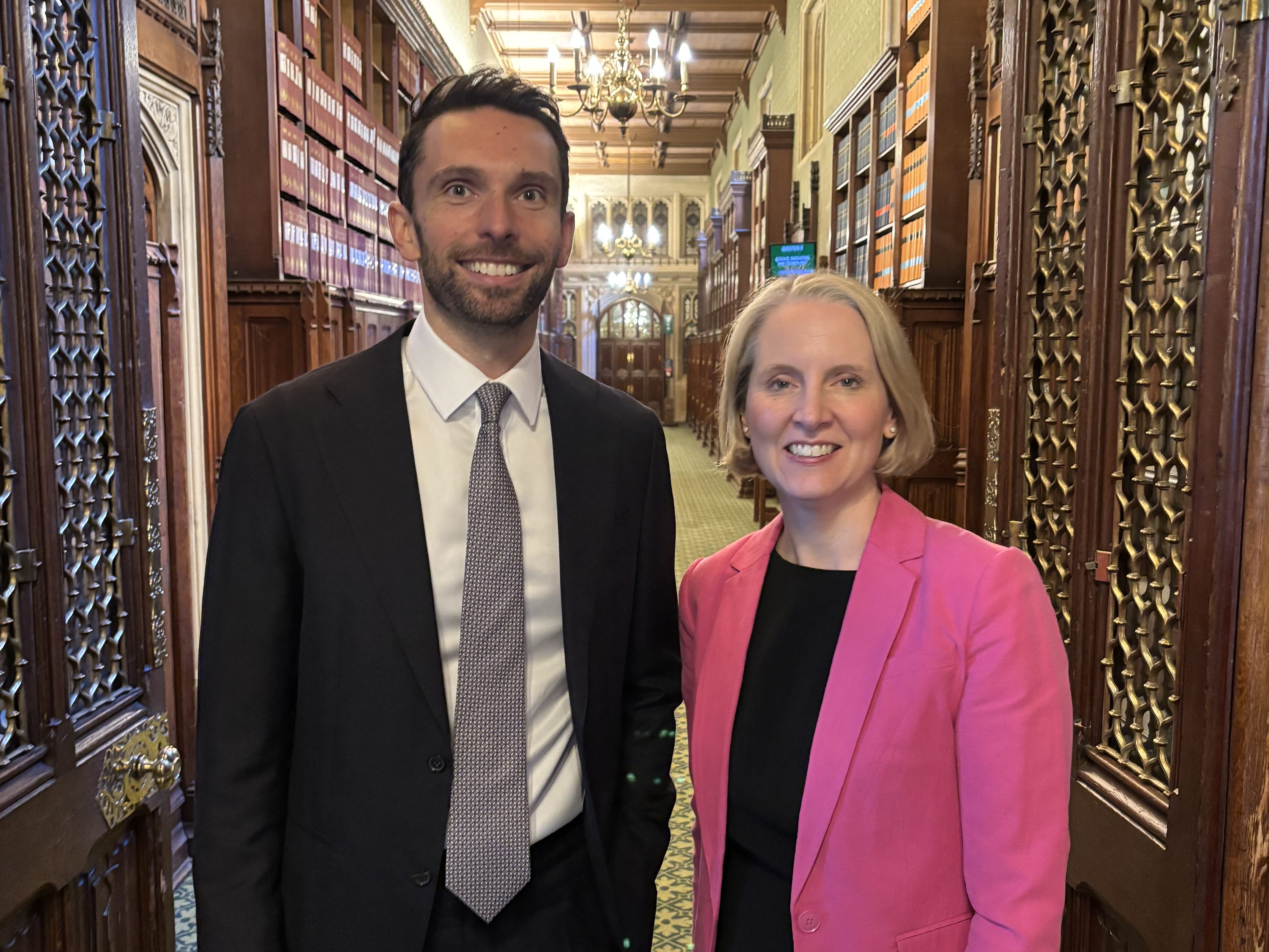
Josh with the Environment Secretary, Emma Reynolds MP
Josh MacAlister MP has welcomed the Government’s new Land Use Framework, describing it as a “vital step forward in making smarter decisions about how we use our land – backing farmers, restoring nature, and delivering growth in the right places.”
The Framework sets out a clear national approach to balancing competing demands on land – from food production and nature recovery to housebuilding and major economic projects – using better data, clearer planning, and long-term certainty.
Josh MacAlister made representations to Ministers on behalf of local farmers and developers during the development of the Framework to ensure the final plan reflects the needs of both food producers and those driving economic growth.
He said:
“I’ve worked closely with Ministers throughout the development of this Framework, bringing forward the views of local farmers and businesses. It’s important that we get this balance right – and I’m pleased that this plan reflects those priorities.”
The Framework includes a strong commitment to protect the country’s most productive agricultural land and maintain domestic food production, giving farmers the certainty they need to invest and plan for the future. It also introduces simpler systems, reduced red tape and clearer long-term direction for the sector.
Alongside this, the Framework puts nature recovery at the heart of economic development, identifying where action such as tree planting, peatland restoration and habitat creation can deliver the greatest benefits, while ensuring growth can still go ahead.
It will also support major economic developments, including projects such as Pioneer Park, by reducing planning uncertainty, unlocking investment and accelerating delivery.
Josh added:
“Food security is national security. This Framework makes clear that we will safeguard our best farmland while supporting farmers to grow their businesses and remain resilient in the face of climate change.
“The Framework also makes clear that choosing between growth and nature is a false choice. We can restore our environment while also delivering the homes, infrastructure and jobs our communities need.
“Whether it’s new homes or major projects like Pioneer Park, this Framework gives us the clarity to move forward – cutting delays, unlocking investment and supporting jobs, while protecting our countryside.”
The Government has committed to building 1.5 million new homes, and the Framework will help ensure these are delivered in the right places – using better data to avoid unnecessary pressure on high-quality farmland and environmentally sensitive areas, while speeding up planning decisions.
The Framework marks a shift towards a more co-ordinated, strategic approach to land use, ensuring England has enough land to grow food, build homes, generate clean energy and restore nature.











 Josh MacAlister MP