The axe fell in many places when the Conservative-Lib Dem coalition government came to power in 2010. According to a report by Parliament’s cross-party Transport Select Committee in 2011, the cuts made to support for bus services in England “created the greatest financial challenge for the English bus industry in a generation.”
The impact is obvious to anyone. More than half of all bus routes across our region were axed in the intervening years as subsidies vanished and commercial operators withdrew unprofitable routes. Between 2014 and 2023, with its government bus grant gutted, no bus services were funded by Cumbria County Council.
Jump to 2024 and the new Labour government began to build back support for bus services. This extra funding allowed Cumberland’s Labour-led council to invest in local bus services for the first time in a decade. An even bigger government funding pot this year – totalling £5 million – has allowed Cumberland Council to embark on the biggest boost to bus services in a generation.
I was pleased to play my part in calling for and voting through those funding increases, but I want to pay particular credit to the officers and political leadership of Cumberland Council for their work. Cllr Denise Rollo, with the backing of all Labour councillors, has made this a political priority for the council. And officers have carried out an extensive piece of work to engage with the public – nearly 3,000 people – identify gaps in the network and come up with plans to fund routes which fill as many of those gaps as funding will allow.
I’m delighted that the plans include many of the routes I and local Labour councillors have been calling for, connecting communities across West Cumbria which haven’t seen a bus in years. I’m also really pleased that the council will be launching a capital programme of bus stop upgrades and I’ll be sharing my suggestions for our area.
We finally have a government and a council which recognises the importance of buses to local communities and is committed to investing in local services. What we need now are bus operators to step up and bid to deliver these subsidised services. We can’t have a situation where national and local government agree to fund services, communities demand services, yet bus operators don’t come forward to run them.
I’ll be writing to a wide range of local and national bus operators calling on them to step up and come and deliver these new services in Cumberland. But I’m also asking members of the public to step up too. To make these services viable, people need to use them.
Help me to demonstrate the strength of local support for these new services by taking the pledge to Back the Bus today: joshmacalister.uk/backthebus
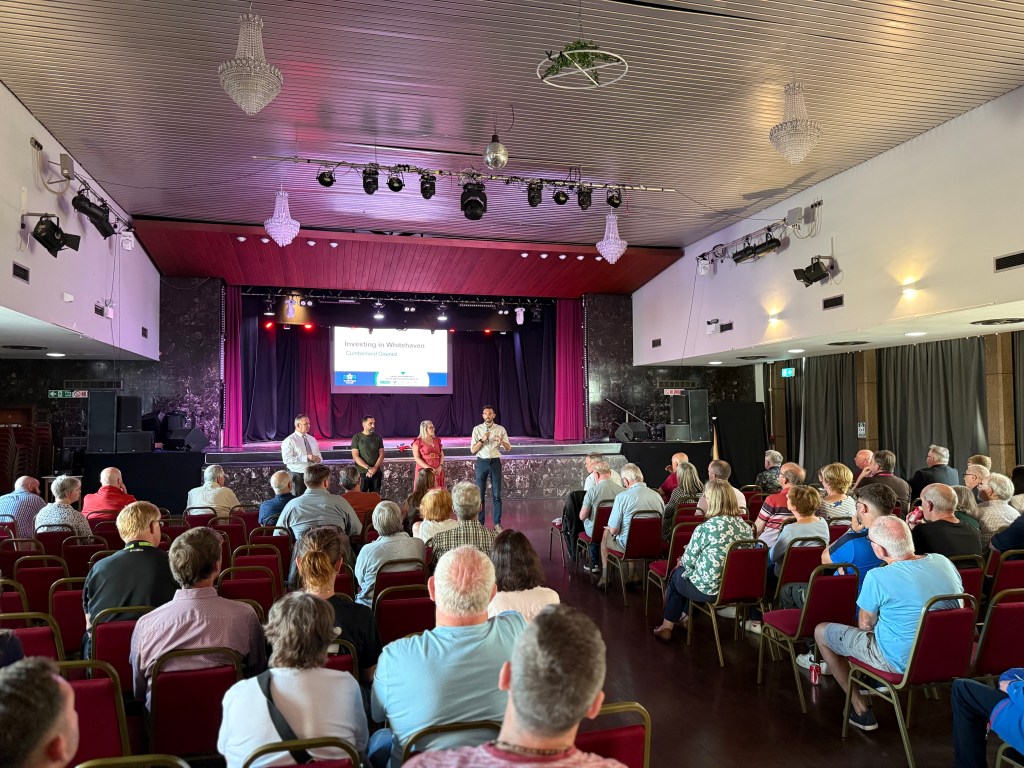
A public meeting was held last week to update residents on the progress made on some key improvements to Whitehaven town centre and lay out the next steps for the development of a Masterplan before the end of the year.
The meeting, attended by nearly 100 residents from across the town, was hosted by Whitehaven MP Josh MacAlister, Cumberland Council deputy leader Emma Williamson, councillor Joe Ghayouba and Cumbria’s Police, Fire and Crime Commissioner, David Allen.
At a similar meeting last summer, residents complained about the lack of public toilets, cleanliness in the town, empty shops, anti-social behaviour and the state of the harbour. Progress on all five issues was reported.
Speaking at the meeting, Cllr Emma Williamson said she had secured funding for a study to determine the best location and costs of installing new public toilets: “I’m committed to delivering the funding to put new toilets in. What I can’t do is then fund their ongoing upkeep, that needs to be the responsibility of the town council and we’re in discussions with them about that.” Town councillors in attendance confirmed the matter would be considered as part of their annual budget setting process this autumn.
After feedback last year, Cumberland Council carried out a deep clean of the town centre and has invested half a million pounds in new public spaces on Market Place and Duke Street. Emma confirmed that the council will dedicate more resources to keeping the town centre clean, tackling enforcement issues and other concerns of residents.
Cllr Ghayouba has led efforts to bring empty shops back into use and clean up shopfronts. He reported that Cumberland Council has opened up two empty buildings it owns – one for the new Family Hub on the Harbour, which is now a thriving space running a range of family friendly events. The second was an empty unit on King Street which has been given, rent free, to Soundwave, which is providing opportunities to access music to local young people. Joe also reported that the council has started enforcement action against the worst absentee landlords on King Street: “We want landlords to work with us, get their properties up to scratch and back into use. Where they won’t, I’ll be pushing the council to use all available powers to hold them responsible.”
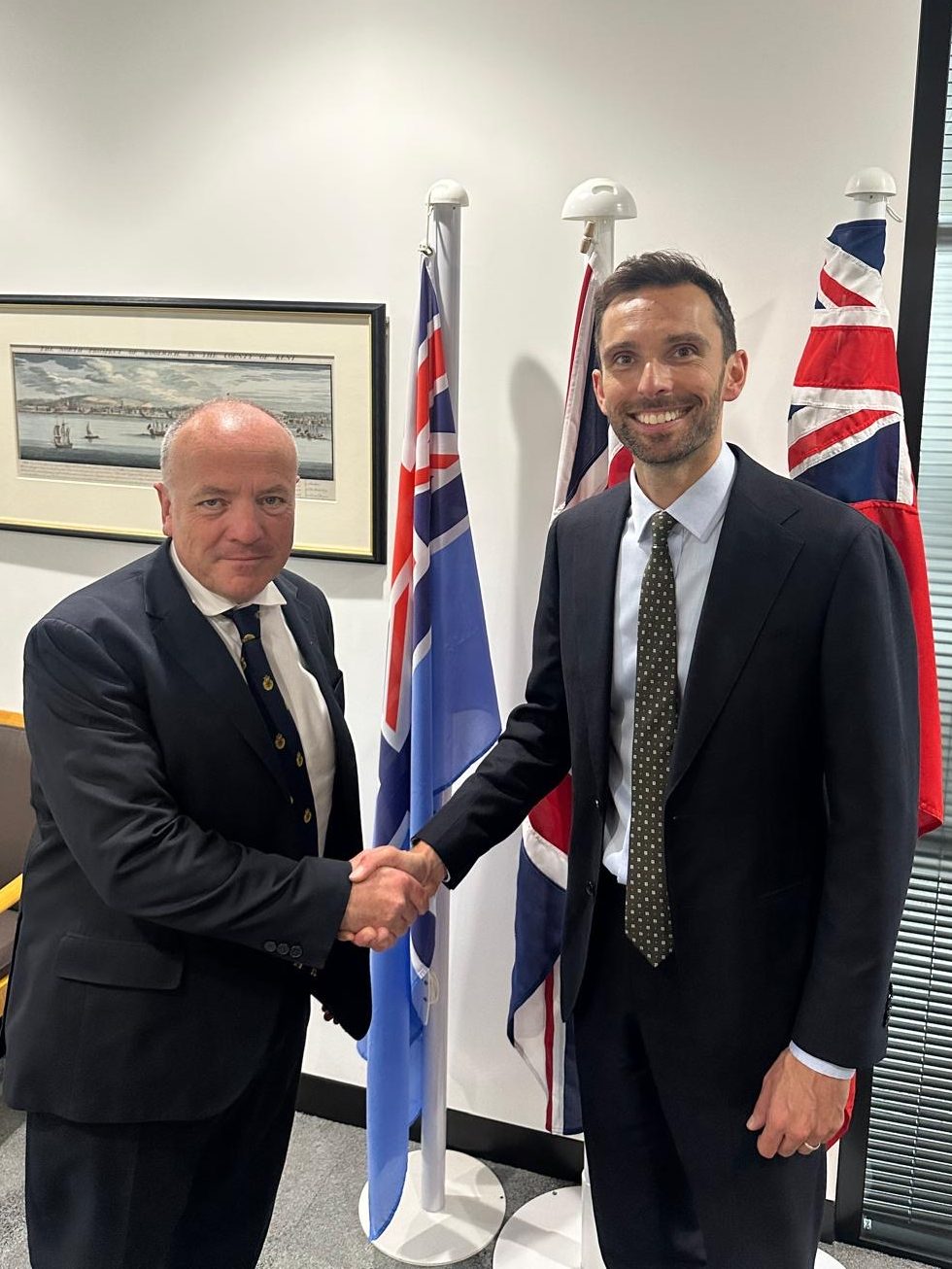
Commissioner David Allen had positive news on crime and anti-social behaviour. Thanks to additional funding he secured from the Labour government to deliver increased patrols in the town centre, reported anti-social behaviour is down by 37%, burglary by 40% and violent crime by 25%. The Commissioner confirmed we’d soon see more police on the streets in Whitehaven thanks to the Neighbourhood Policing Guarantee: “Working with our MPs, I secured nearly £1.7 million from the government which I’m using to nearly double the size of our neighbourhood policing team in Cumbria. That means more neighbourhood beat officers, more PCSOs and more special constables on the streets in Whitehaven, keeping people safe.”
Whitehaven MP Josh MacAlister told residents that after two years of inaction under the previous government, he’d spent the last year trying to get the orange water out of the harbour and a solution was just around the corner: “I’ve got the government working on this at the highest level, across six departments and agencies, with three ministers awaiting the outcome of a feasibility study, who’ve given a commitment to work with me to get the funding in place this autumn.” Josh also confirmed he’s continuing efforts to introduce a passenger service to the Isle of Man and working to run practical sailing courses out of Whitehaven Marina to bring in more tourists.
Both BEC and Whitehaven Harbour Commissioners were in the room and residents were reminded that The Edge activity centre and Levels digital gaming hub will open before the end of the year, providing a wider offer in the town for residents and visitors. There has also been an even bigger programme of events in the past year, with new events like the Eat Street Festival and the visit of the Galeon Andalucia alongside events like HarbourFest, Pride and the TEGretail markets.
Cllr Ray Gill, Chair of Whitehaven Town Council, said: “We mustn’t talk the town down. There is more to do, but it’s a great town and there’s a lot going on and progress is being made in lots of areas.”
Josh agreed: “Whitehaven is a brilliant town. We should take the time to recognise and celebrate the progress that has been made over the past year. But we mustn’t be complacent either as there’s lots more to do.
“My hope and our plan is that by the end of the year we’ll have a Masterplan in place and, importantly, the funding package to start delivering it. I’m determined this won’t be another nice looking plan which sits gathering dust on a shelf and I know Emma and her colleagues on Cumberland Council share that view. This time we need to deliver.”
Emma said: “I want to thank all the residents who attended the meeting and the nearly 600 who have completed Josh’s survey with their ideas for the town. We’ll fold all of that data into our work.
“The council’s formal engagement will kick off with a drop-in event on 5th August, 2-7pm, at the United Reform Church on James Street in Whitehaven, and there’ll also be an online consultation and further public events before we publish the draft plan in the autumn ahead of sign off before the end of the year. Look out for further details from the council in the coming weeks.
“I really encourage as many residents as possible to get involved and have your say as this plan has to be shaped by you and what you want to see our town centre look like in the coming years.”
I’ve written before about the complete re-wiring of childhood that has taken place with the rise of addictive social media and smartphone use. After starting a national debate and securing commitments to further government action through my Safer Phones Bill I’m now focused on what more we can do at a local level here in West Cumbria.
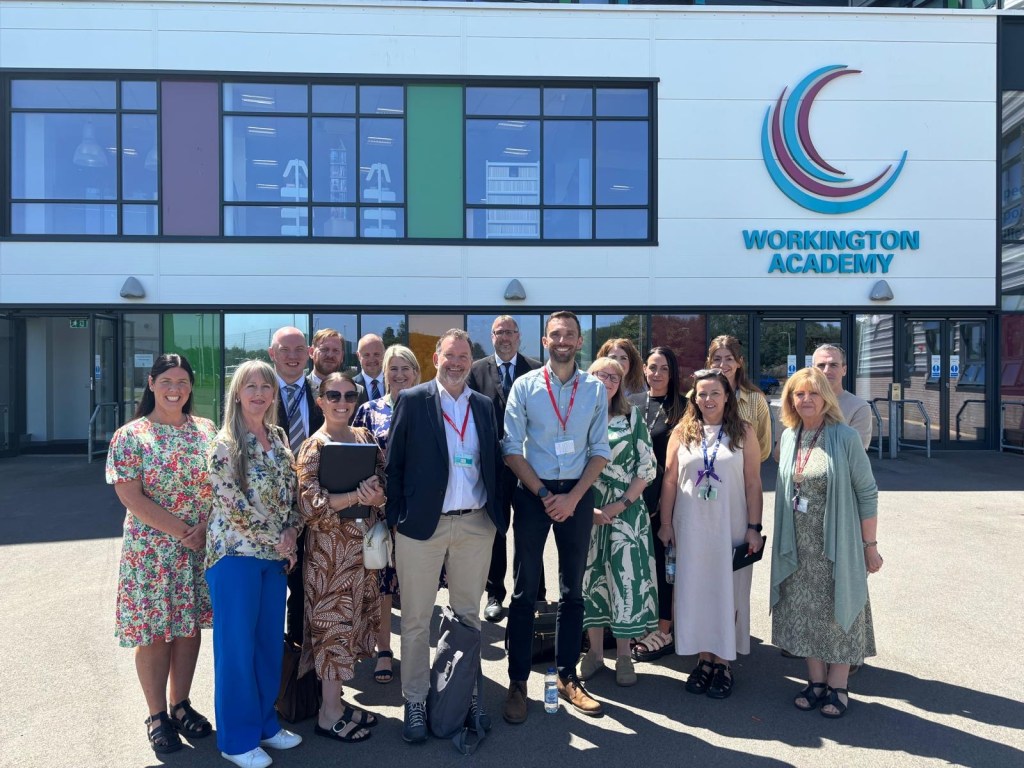
I recently brought together school leaders from across West Cumbria to discuss how we can take a local approach to tackling the increasingly damaging impact of smartphone and social media use on the development, health and education of our children.
Working in partnership with schools, health professionals, parents and children and young people themselves, I want us to launch a local Parent and Teacher Pact . This pact has two interlinked elements to it. The first is to build commitment by parents to delay giving children access to smartphones until they’re at least 14, and keeping them off social media until they’re 16. I know this sounds far fetched, but other parts of England have done it and the results are so positive!
Most children have access to these devices and apps at a young age. I’m not blaming parents. I get it. The pressure to conform, to ensure your child isn’t the only one missing out, is enormous. The pact is all about strength in numbers – if your child knows that other kids in their class won’t be getting a smartphone for a few years either, the peer pressure instantly dissolves. So we need to get a critical mass of parents behind this in every school.
If you’re a parent and you’re interested in taking a lead in your school please get in touch. It won’t all be left to parents – this would be backed by more enforcement of no phone policies by schools, which schools are up for.
Being a parent right now is tough. That’s why the second element of the pact would be more support for parents when children transition to start primary or secondary school.
The idea would be to give parents and teachers time together as part of the induction to agree on the best ways to provide rewards, boundaries and attention etc. The evidence for doing this across a whole community is really encouraging and I’d like our area to be the first in the UK to give it a try. I’m working with school leaders and local funders to figure out how we can pay for this.
This new pact between parents and teachers could be transformational for the learning, health and happiness of children in West Cumbria. Given the scale of the challenges facing teenagers, it’s well worth trying something different together.
Plans to build a plant to produce green jet fuel in Workington have been greenlit by the government, with £6 million funding to fast-track the project to the next stage announced today.
Workington MP Josh MacAlister, who has been working behind the scenes for months alongside Cumberland Council to bring the plant to a site near the Port, joined Aviation Minister Mike Kane to celebrate the announcement this week.
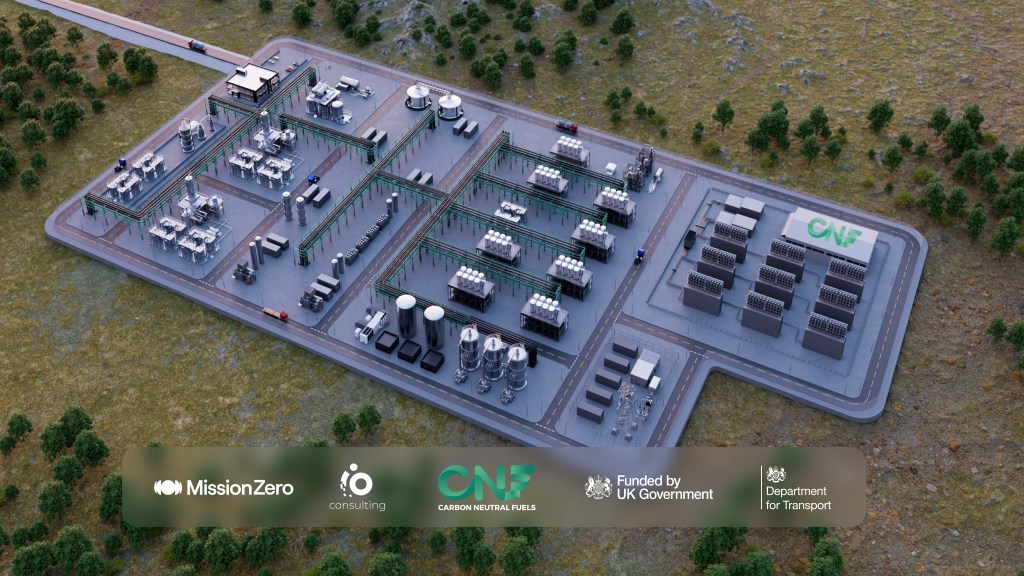
A mock up of what the facility, located adjacent to the Port of Workington, would look like
The company behind the Workington project, Carbon Neutral Fuels, received the largest award for a fuel project in this funding round, and it was the only project awarded in Cumbria. The grant will support the completion of Front-End Engineering Design (FEED) for the facility, positioning it for investment and construction in 2027, with a target operation date of 2031.
Josh said:
“I am thrilled that we can now reveal Workington as the intended home for this new facility after months of work behind the scenes to secure the funding and the site and sort out the grid connection, which we’re now in the final stages of.
“This £6 million cash injection from the government is a real vote of confidence in our community which will help to fast-track the project to a final investment decision. We’re not at the final hurdle yet, but this is a really positive step forward not only for the UK’s ambition to be a global leader in green aviation, but also for West Cumbria’s industrial regeneration and my plan to bring the green jobs of the future to our community.
“The plant’s intended location close to the Port of Workington also supports the plan I’m developing with Cumberland Council for a major upgrade of the port. The council and I recently met with the Minister for Industry to discuss the next steps for that project and we’ll be driving it forward in the weeks and months ahead.
“We’ve got an MP, a council and a government working in lockstep to deliver a brighter future for West Cumbria. There’s a lot to be excited about!”
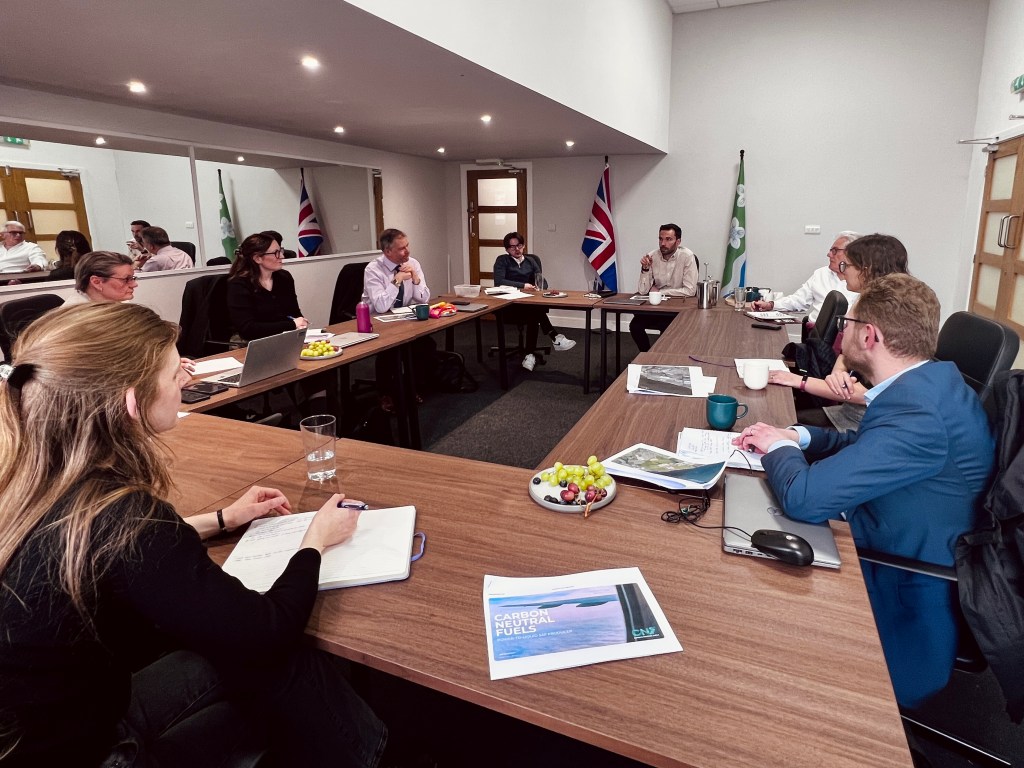
A roundtable with Carbon Neutral Futures hosted by Josh earlier this year to resolve issues with the grid connection – key to bringing to plant to Workington
Sophie Zienkiewicz, Co-Founder of Carbon Neutral Fuels, added:
“Our vision for Carbon Neutral Fuels is to prove that decarbonising flight is both possible and essential. This Government funding will help us deliver our facility in Workington, West Cumbria, that significantly reduces the aviation industry’s overall carbon footprint, but reshapes what’s possible for future fuels.”
Sustainable aviation fuel is an alternative to fossil jet fuel which reduces greenhouse gas emissions. Carbon Neutral Fuels are pioneering a process using carbon dioxide and low carbon electricity with a plan to produce 25,000 tonnes per year of green jet fuel. Once operational, the facility is expected to deliver an 89% reduction in lifecycle emissions compared to fossil jet fuel, making a significant contribution to the UK’s climate targets.
Low carbon fuel production could add up to £5 billion to the economy by 2050, position the UK as a global hub for sustainable aviation fuel production and enable the UK to go further and faster with expansion plans.
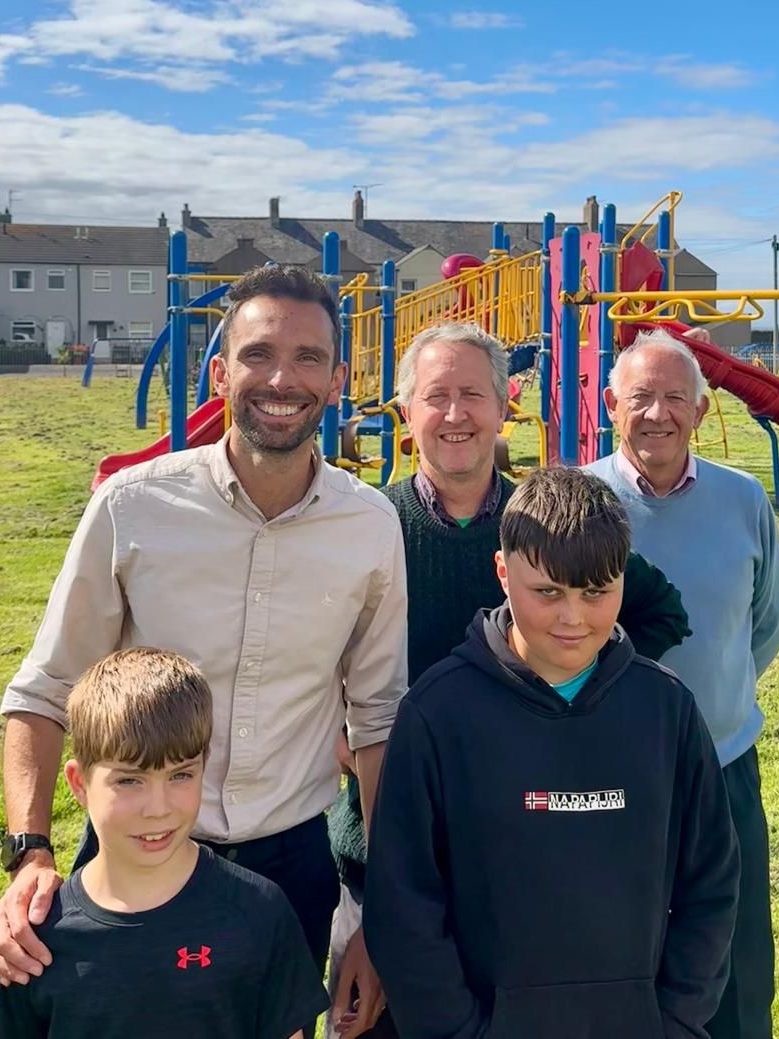
Flimby playground is set for a refresh following a campaign by two young park users with the support of local MP Josh MacAlister.
Kaelan and Ethan, 13, launched a petition which was signed by over 500 Flimby residents calling for improvements to be made to the playground, which is in a poor state of repair, with old and damaged equipment.
Josh took up the cause with Cumberland Council, who have now agreed to undertake some vital maintenance this summer, including replacing the swings, removing graffiti, repainting equipment and removing rust.
Plans for longer term improvements will also be drawn up and Cumberland Council have agreed to make a contribution to a bigger upgrade to the playground. Josh will write to Maryport Town Council and some local businesses about also contributing.
Josh said:
“I want to thank Kaelan and Ethan for their passionate campaign which led to this result.
“Flimby deserves a top notch playground and the repair work this summer is the first step to get us there. I’ll be working to secure the funding needed to deliver it and will ensure that young people who use the park are involved in designing it.”
The Labour Government has announced a radical overhaul of the way local councils are funded, fixing the unfair, outdated system left behind by the Conservatives and allocating money according to need.
Under the Conservatives, rural and coastal areas like ours were overlooked and faced higher costs to deliver essential services across long distances and smaller populations. Coupled with a decade of austerity, councils up and down the country were crippled and left struggling to run basic services.
We’re going to fix this. The local government funding system will be reformed to get councils back on stable footing, improve lives for people across West Cumbria and deliver essential funding for better public services.
Labour will update the decade-old funding system to ensure that councils get the fair share of funding they need to deliver local services, specifically recognising the higher costs of delivering services in coastal, rural and remote communities like ours. For the first time, the Government will factor in things like remoteness and sparsity, seasonal demand from visitors and the cost of public services in coastal economies when assessing funding needs, supporting councils like ours to deliver services more effectively.
Alongside this, the Labour Government has also announced action to make things fairer for council taxpayers by ending outdated rules for tax collection and spreading payments over 12 monthly bills as standard.
At the moment, those facing financial difficulty who miss council tax payments can be required to immediately pay the whole year’s sum, with bailiffs being sent and no payment plan offered. Under Labour’s plans, payment plans will now need to be offered, with councils working closely with those struggling with their bills.
I’ve written to Deputy Prime Minister Angela Rayner, alongside my fellow Cumberland MPs, Cllr Mark Fryer, and Commissioner David Allen, to make the strongest possible case to ensure that Cumberland benefits from this new fair funding review and we’ll be lobbying ministers in the months ahead to ensure we do.
Alongside our work to deliver an ambitious mayoral settlement for Cumbria, our push to make Cumbria the pilot for devolved funding and decision making for farming and nature recovery, our campaign for a major upgrade of the Cumbrian Coast Line, and our effort to bring new nuclear to our area, Cumbria finally has a united team of political leaders working together locally and nationally to speak with one voice and fight for our communities.
With some of the most deprived communities in the country right here in West Cumbria, I’m also arguing for specific, targeted funding from the government to be provided at a local level for long-term investment to help transform deprived neighbourhoods. I’m working closely with ministers to make the case for this programme and hope to have more to say on that soon.
Cumbria’s MPs, council leaders and nuclear industry representatives met with Rail Minister Lord Hendy in Parliament recently to make progress on plans for a major upgrade of the Cumbrian Coast Line through West Cumbria.
After ten years with no progress under the previous government, plans are now motoring ahead. This is the second meeting Cumbrian leaders have held with the Rail Minister and Whitehaven and Workington MP Josh MacAlister has raised the upgrade twice in Parliament with the Secretary of State in the last month.
Responding to Josh’s question in Parliament, Transport Secretary Heidi Alexander said:
“My honourable friend has been a great advocate for his constituents on this topic and makes a strong case for the scheme. My officials are working with Cumberland Council and across Whitehall to refine the business case he refers to.”
Josh said:
“Cumbria is speaking with one voice on this important issue and we are finally making real progress after years of dither and delay under the previous government.
“We have updated the outline business case, we are in the process of sourcing funding to get it to final business case and we are lobbying ministers hard to ensure that once we have that we are in the strongest position we can be to get this project into the government’s infrastructure pipeline during this Parliament.
“The Rail Minister agreed to meet again in the autumn and in the meantime there will be meetings at official level to make progress on developing the next stage of the business case.”
You don’t need me to tell you the state our NHS was in last summer. Record waiting lists, doctors on strike, buildings falling apart, mental health services at the brink of collapse, near impossible to get a GP appointment or find an NHS dentist. We were dangerously close to the NHS ceasing to exist as a publicly funded service, free at the point of use. I was elected as your MP and Labour were put in government on a promise to fix the mess left behind by the Conservatives in our NHS.
We’ve made really good progress nationally and locally to start that work with our first steps over the last 12 months. Nationally, we’ve created 4 million extra appointments against a target of 2 million. Waiting lists are down, we’ve recruited 1,900 more GPs and 6,700 more mental health workers. We’ve pumped money in to create more urgent dental appointments and started reforming the NHS dental contract. And we’ve injected £26 billion extra into the NHS for day to day spending this year, with £29 billion extra coming next year and every year up to 2030. Record investments.
Locally, waiting lists for treatment in north and west Cumbria are down 7%. We’ve got a new Urgent Dental Access Centre based in Whitehaven seeing 140 patients a week. GP practices in Whitehaven and Workington have been given funding to expand their clinical space to create over 4,000 new GP appointments every year and GP numbers are slowly increasing. A new 24/7 community mental health hub will open soon in Whitehaven – one of only six in the country. I’m pleased to have secured a new clinical pathway for cancer patients attending A&E at West Cumberland Hospital. And I’m working to transform primary care in Workington with a new Neighbourhood Health Centre.
This is a great start, but there is much more to do. Last week the government took the next step, laying out a Ten Year Plan to get our NHS back on its feet and make it fit for the future.
The plan lays out an ambitious agenda, ensuring we’re not just spending more money and hoping that will improve things. It aims to give patients more power by delivering three big shifts in how the NHS works: from hospital to community; from analogue to digital; and from sickness to prevention. And it will tackle some of the enduring health inequalities plaguing our country, making sure that those in working class communities like ours are no longer served last.
If we seize the opportunities provided by new technology, medicines, and innovation, then we can deliver better care for all patients – no matter where they live or how much they earn – and better value for taxpayers.
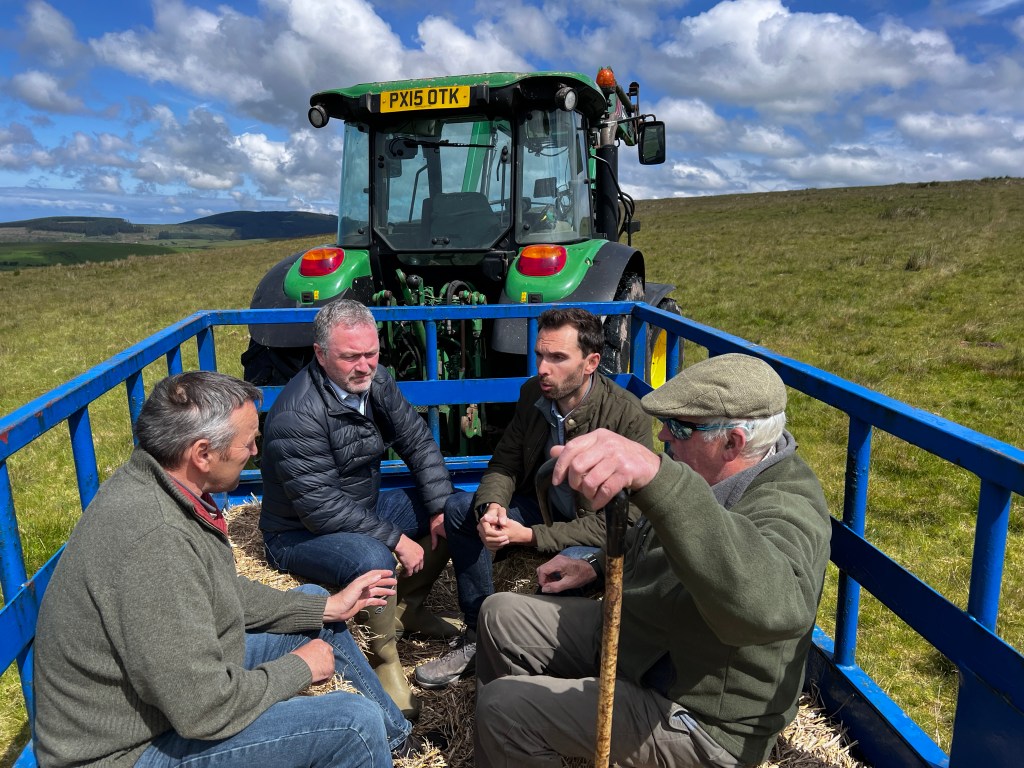
Political, farming, business, education and nature leaders across Cumbria have banded together in a bid to secure a major devolution of funding and decision making for upland communities to support farming and nature recovery in the county.
Over 40 community leaders have backed a bid by Cumbria’s MPs to devolve the government’s budget for farming and nature recovery to the county, meaning funding and decisions about how that money is spent would be made here in Cumbria. At present, schemes are determined by civil servants in Whitehall and farmers and land managers have to submit lengthy and costly bids to national agencies to access funding for farm support and local national recovery projects.
In 2024, farmers in Cumbria received over £100 million through the various government subsidies and schemes. At the Spending Review, the government confirmed the largest ever funding settlement for farming and nature recovery, with £2.7 billion committed each year from 2026 to 2029. Devolving Cumbria’s share of that funding and putting decisions about how it is spent into the hands of local decision makers and upland communities would be a radical shift and the first such experiment in the country.
Leading the bid are Cumbria’s MPs, who want our county to be a test bed for this radical new approach – and say that our area is ready to take on the challenge. In a joint statement, MPs Josh MacAlister, Michelle Scrogham and Markus Campbell-Savours said:
“We’re delighted to be working with local authority leaders, the national park and the leaders of our farming, nature, business and education sectors on this ambitious bid to radically devolve power and funding for the first time out of Whitehall to upland communities to support farming and nature recovery. The support of all of these organisations will be vital to making a success of this.
“We know from our conversations with hundreds of local farmers and land managers that we have the people, knowledge and skills we need right here in Cumbria to make the best decisions about how to spend money to support our unique system of farming and the vital nature recovery work we need to do. We just need the government to back our approach and let us get on with it. We’ll be lobbying ministers hard to secure this pilot for Cumbria.”
Cumbria is home to the largest concentration of Common Land in England and home to 5,000 farms employing 12,000 people. In a letter to Hilary Cottam, who is leading a review for the Department for the Environment, Food and Rural Affairs into farming and life in upland areas, local leaders write that “There is no other upland community in England that offers the scale and variety of farming, nature and conservation opportunities and challenges, as well as existing collaboration and innovation driven by genuine bottom-up momentum.”
Gavin Capstick, Chief Executive of the Lake District National Park Authority, said:
“The Lake District is a truly special place. Its environment, ecology and wildlife and the cultural heritage of its unique upland farming system are all vital parts of our designation as a National Park and as a World Heritage Site. But all these elements face threats and uncertainty. We know we all must go further and faster to improve the state of nature while nurturing and protecting the traditions and value of hill farming communities.
“The Lake District National Park Authority has long championed nature friendly farming as key to meeting many challenges, an attitude which has been embraced by much of the farming community and is demonstrated through many of the Farming in Protected Landscapes (FiPL) projects. However, certainty and support are needed to deliver at scale. We have long argued for bespoke agri-environment options or schemes for the National Park. Schemes that support land managers and farmers to improve the state of nature while recognising the traditions and history that have helped shape the Lake District landscape.
“This proposed pilot is a really exciting opportunity to bring local partners together to co-design schemes that deliver for nature and bring certainty and support to our local farmers.”
Adam Day, Managing Director of The Farmer Network, said:
“The many services and benefits that farming in Cumbria bring to society are often neither recognised nor understood. We forget that we need farmers three times a day. Cumbrian farmers produce great food. They also manage the revered landscapes, contribute hugely to the rural economy and are the bedrock of our rural communities.
“We must ensure a viable and sustainable future for farming in Cumbria. We will need them more than ever in years to come.”
It was the greatest honour of my life to be elected as your MP one year ago.
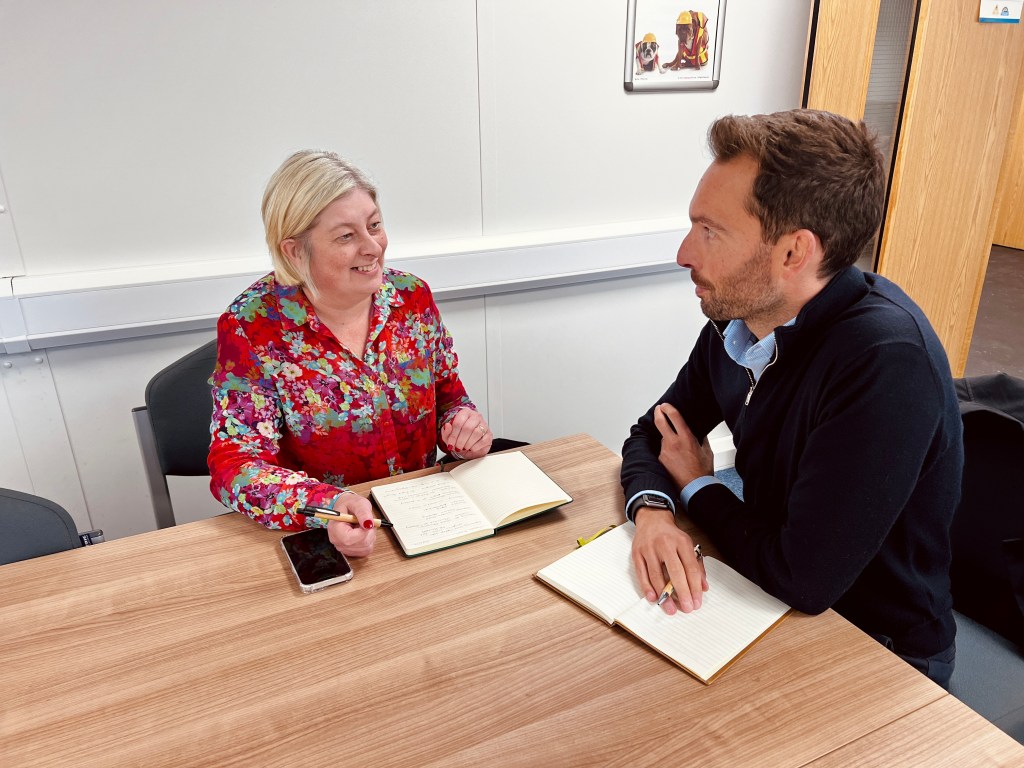
I promised to be visible and accessible and I’ve hosted 65 advice surgeries, coffee mornings, drop-ins, street surgeries, public meetings, neighbourhood walkabouts and supermarket surgeries, engaging 3,000+ residents in the process. I appreciate everyone who takes the time to talk to me and respect your views, even when we might not always agree on everything. All those conversations help me to learn and shape my thinking as your MP.
I’ve managed to meet more than 300 local organisations. Schools, businesses, housing and healthcare providers, farmers, charities and community groups. These visits and conversations give me invaluable insights that I often then take up directly with ministers to shape policy decisions.
My small and dedicated team and I have dealt with over 6,500 individual pieces of casework from west Cumbrians at the time of writing. About two thirds of these are from people asking me what I think about a policy or issue, will I support or oppose a particular Bill or will I vote for or against a Motion. Politics is to make choices and on every issue I have representations from all sides to weigh up alongside my own views, those set out in Labour’s manifesto and what is in the best interests of the country overall. Many of these are hard choices. I carefully reflect on all the correspondence I receive before making my mind up. I hope people feel my replies reflect this and my choices are considered even when you don’t agree.
The rest of my casework involves representing people where systems have failed and aren’t working as they should. We’ve got hundreds of examples where we’ve managed to help people as a result of our intervention. Sorting out a hospital appointment which keeps getting cancelled. Chasing up delays with housing repairs and getting them done. Securing compensation for someone who had a poor service. Things which make a difference to the daily lives of those affected.
In Parliament, I’ve spoken or asked questions 80 times, with a focus on the priorities raised with me by local people. But this only tells a small part of the story of my work in Parliament. I’ve written dozens of public and private letters to ministers on local issues and had more than 50 ministerial meetings with everyone from the Prime Minister down, all to advocate for West Cumbria. I haven’t tallied up all of my other meetings in Parliament but I’ve had dozens of meetings just to advance the cause of new nuclear in West Cumbria with ministers, advisers, officials and potential vendors and developers.
I hope this reassures people that I am working hard to deliver for you and for West Cumbria every day. If you need my help with anything, please contact me anytime.



 Josh MacAlister MP