MP steps up campaign to secure devolved farm funding for Cumbria

Josh MacAlister MP has intensified his push in Westminster to win a new devolved farm-funding settlement for Cumbria – one that puts decisions in the hands of local people and delivers real support for farmers, rural communities and nature recovery.

Josh has held multiple meetings with ministers in recent months, pressing the case for Cumbria to lead a new model of locally driven funding as part of a pilot being considered by the Department for the Environment, Food & Rural Affairs.

(Cumbrian leaders unite in radical bid for farm funding)

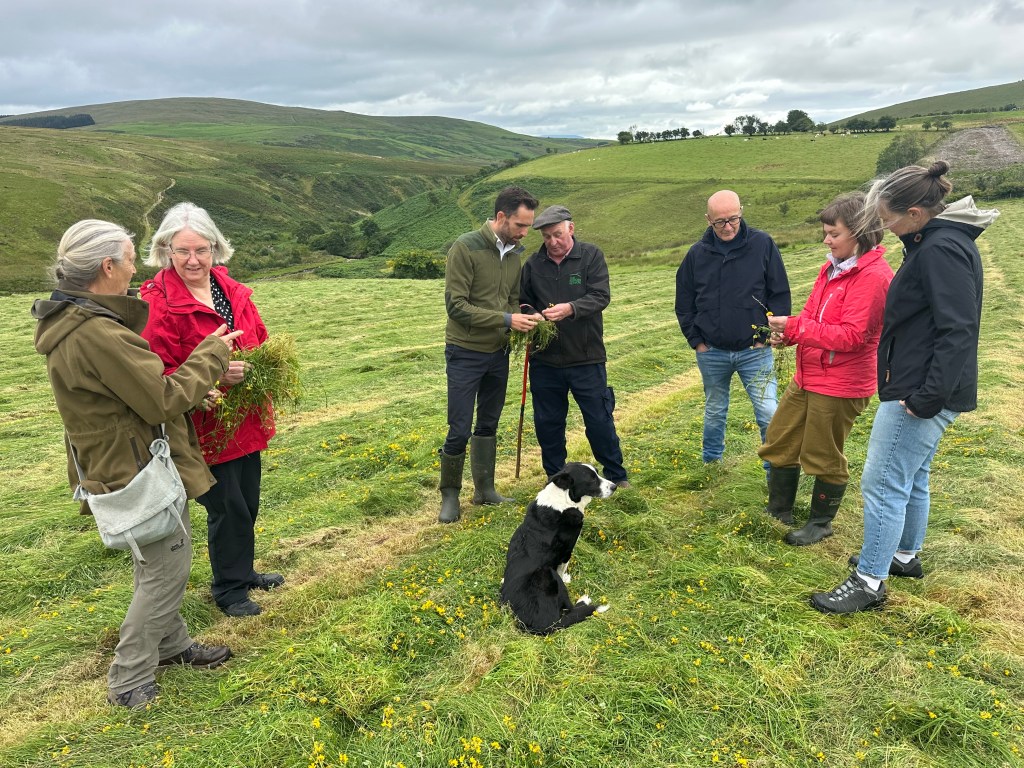
Following the call from local leaders over the summer, a roundtable was held in Cumbria in the autumn, bringing together MPs, farmers, agricultural businesses, nature and conservation charities, to discuss the proposal with officials from the Department for the Environment, Food & Rural Affairs. It could mean decisions about how to spend tens of millions of pounds a year being made locally.

Josh has written again this week to the new Secretary of State for Environment, Food & Rural Affairs, urging the Government to back a Cumbria-led pilot that would simplify support for upland farms and ensure future schemes reflect the realities of Cumbrian landscapes and livelihoods.

Josh MacAlister MP said:

“Our farmers are the backbone of rural Cumbria, and they are facing pressures that national schemes simply aren’t built to handle. I’m fighting to change that.

A devolved settlement would mean decisions made in Cumbria, by people who understand our land, our heritage and our communities. It would give farmers the certainty and support they need, and it would help us restore nature in a way that strengthens – not undermines – rural life.”

Cumbria has the largest concentration of common land in England and a farming system woven into its UNESCO World Heritage Site status. Yet upland farms have seen incomes fall sharply in recent years while navigating increasingly complex national funding rules.

Josh argues that a devolved model – designed and led in Cumbria – would cut through bureaucracy, align support with local priorities, and accelerate progress on nature recovery, climate resilience and food security.

He added:

“In Cumbria we have the leadership, the partnerships and the experience to make this work. From our local councils and national park to farming groups, commoners and conservation organisations – there is real unity behind this.

My message to ministers has been simple: let Cumbria lead. I will keep making that case until we get the settlement our farmers and communities deserve.”

Gavin Capstick, CEO of the Lake District National Park Authority, said:

“A more devolved funding model would allow Cumbria to tailor existing schemes or add bespoke new elements so that they work better for our upland landscapes, our heritage and the communities who sustain them.

The Lake District is a globally significant place, and the future of its farming and nature depends on decisions being shaped locally.”

Will Rawlings, Director of West Lakeland Farmer-Led Nature Recovery CIC, said:

“Farmers across Cumbria need funding systems that are simple, practical and tailored to the challenges of upland farming – not one-size-fits-all schemes made hundreds of miles away.

A devolved approach would put local farmers at the heart of shaping our future, and we hope ministers will hand over the reins so we can seize the opportunity this presents to protect the future of farming in Cumbria.”

Josh confirmed he will continue working closely with local partners and pushing Government to back a Cumbria pilot as part of the upcoming national investment in farming and nature recovery.

Are you a local farmer? Sign up to attend Josh’s next Farmers’ Forum, 6pm, Friday 30th January: joshmacalister.uk/meetjosh

Weekly Column – 03.12.2025 – A Budget delivering security for families and opportunities for every child

Last week’s Budget marks a significant step to ease cost-of-living pressures on workers, families and pensioners, while laying the foundations for a country where every child has the chance to thrive. Global instability and domestic pressures have tested household budgets, and the Government is acting to provide support.

Ensuring older people live with dignity and security is a cornerstone of our approach. By maintaining the triple lock, we’re delivering an increase of up to £575 for pensioners next year – and pensioners whose only income is the State Pension will not pay income tax in this Parliament. There is also help with fuel bills through the Winter Fuel Allowance of up to £300, plus a further £150 for the poorest pensioners through our expansion of the Warm Homes Discount. And over 500 retired miners in West Cumbria are getting a boost to their pensions thanks to our changes to hand over cash from the Mineworkers Pension Scheme and the BCSSS to its members which has been denied to them for so long.

We are boosting the pay of apprentices and those on the lowest incomes with major increases in the National Minimum Wage and National Living Wage – a pay rise for thousands of people across West Cumbria, ensuring work continues to be the surest route out of hardship.

For working families, the Budget strengthens incomes and rewards effort. We’re increasing investment in free childcare, supporting family finances but also benefiting children. High-quality early education is one of the most effective tools to reduce inequalities and improve outcomes for the next generation. The additional funding ensures these reforms are ambitious but deliverable for providers. The expansion of free school meals and free breakfast clubs will benefit hundreds of children across West Cumbria and ensure families keep more of their money.

Other measures will make everyday daily life a little easier: £150 off energy bills for everyone; an additional £150 discount for thousands of low-income households across West Cumbria; a freeze on prescription charges and rail fares; an extension of the £3 cap on bus fares; and continuation of the 5p cut to fuel duty.

The most important impact will be felt by children. No child should be held back because of the circumstances they are born into. Childhood poverty leaves a deep and lasting imprint – on individual life chances and on our society and economy. There are 1,800 children in West Cumbria in households affected by the two-child limit on Universal Credit, the majority in working families. Scrapping the cap will lift hundreds of local children out of poverty. It is fully funded, not by higher taxes on working people, but through higher gambling duties and tackling waste and fraud in the benefits system.

People asked for security, opportunity and hope. This Budget delivers all three – supporting those who most need help now while building a stronger, fairer country for the future.

Labour Government ends miners pension injustice

Josh with members of Pit Crack West Cumbria

169 former mineworkers in Cumbria will receive a significant uplift in their weekly pension, overturning an historic injustice and ensuring fair payouts for years to come.

Following the announcement by the Chancellor in last week’s Budget, Energy Secretary Ed Miliband confirmed that the move will mean a 41% per cent boost to the annual pensions of 40,000 former mineworkers across the UK – an average increase of £100 per week for each member.

The trustees of the scheme are expected to make the first uplifted payments to members before the end of the year, with payments backdated to coincide with when the changes were implemented to the Mineworkers’ Pension Scheme in last autumn’s Budget – a move which gave a £29 per week boost to the pensions of nearly 500 retired miners across Cumbria.

Josh MacAlister, MP for Whitehaven and Workington, where the majority of beneficiaries to the changes live, welcomed the announcement, saying:

“For too long former miners in Cumbria have had to wait for the pension settlement they deserve. I’ve made representations to ministers over the last 16 months as I know have many of my colleagues representing former coalfield communities.

“This Labour government has listened and ended this injustice, delivering what is rightfully owed back to mining families. This is a victory for the relentless campaigning of communities here in Cumbria and across the country.”

Energy Secretary Ed Miliband said:

“We owe the mining communities who powered this country a debt of gratitude.

“For far too long the government has failed to deliver justice for former mineworkers and their families.

“I am delighted that we are rightfully transferring the BCSSS investment reserve back to former mineworkers. I pay tribute to the campaigners who have fought for a fair deal – without them this would not have happened.”

Chris Kitchen, General Secretary of the NUM said:

“The NUM welcomes the BCSSS announcement in the Budget and the Labour Government’s recognition that there were two pension Schemes in the mining industry that suffered historic injustice which they have sought to correct.

“The additional pensions this will provide will benefit not just the pensioner but our former mining communities devastated by the closure of our industry.

“A commitment made, a commitment delivered.”

Record funding boost for local roads

Josh MacAlister, Member of Parliament for Whitehaven and Workington, has today welcomed the Labour Government’s record funding boost for road maintenance, including nearly £100 million for Cumberland Council.

Cumberland Council will now be able to fix many more potholes and prevent new ones through proactive road improvements thanks to a doubling of roads cash by the end of the Parliament as part of the Budget.

The Government is also turning up the pressure on local authorities by more than tripling the share of local roads funding that is tied to transparency – from 8% to over 30% of the budget, over £36 million for Cumberland. The council can only unlock this funding if they publish clear pothole and maintenance data and follow best practice.

Josh said:

“At the election, we promised to fix an extra million potholes a year by the end of the Parliament. This announcement shows that we are putting our money where our mouth is. It’s double the funding that was promised by the previous Conservative government.

“This massive boost of investment in local roads comes alongside funding to cut NHS waiting lists, give everyone £150 off energy bills next year, freeze rail fares and the bus fare cap and extend the fuel duty cut for another year.

“I want to hear which local roads residents want prioritised so I can make representations to the council. Please contact my office with your suggestions to feed into the maintenance planning process.”

Residents can report local roads to Josh at joshmacalister.uk/contact

Campaign success as Cumbrian MP secures exemption from Vehicle Excise Duty for Search and Rescue vehicles

Josh MacAlister, Labour MP for Whitehaven and Workington and a serving Mountain Rescue volunteer, has welcomed the Government’s decision to exempt Search and Rescue (SAR) vehicles from Vehicle Excise Duty (VED) – a change he has been actively lobbying for since entering Parliament.

Volunteer-led Search and Rescue organisations – including Mountain Rescue, Lowland Rescue, Cave Rescue and other specialist teams – are a vital part of the UK’s emergency infrastructure. They work closely with police, ambulance and fire services to save lives in the UK’s most remote and hazardous environments and form an essential component of national resilience planning. 

Despite this vital role, SAR organisations receive no state funding and rely entirely on volunteers, charitable fundraising and donations. Many operate specialist off-road vehicles, often modified to carry lifesaving equipment – vehicles that, until now, were still liable for VED, placing significant financial pressure on teams with limited resources. 

Josh MacAlister MP, who serves in a Mountain Rescue team in the Lake District, said:

“I’ve seen first-hand, as both an MP and a Mountain Rescue volunteer, just how essential these vehicles are – and how hard volunteer teams work to maintain them. Removing VED is a practical, common-sense change that will make a real difference to teams on the ground. It will save my team alone about £2,000 per year.

“Search and Rescue volunteers give their time, skills and courage freely. This exemption recognises their contribution and ensures more of their fundraising can go straight into lifesaving equipment, training and operations.”

There are an estimated 500 SAR vehicles operating across the UK. For many, particularly Land Rover Defenders, costs include both standard VED and the additional luxury car supplement. The estimated cost to the Treasury of the exemption is around £460,000 per year, a modest figure that delivers substantial value to teams nationwide. 

Exchequer Secretary to the Treasury, Dan Tomlinson MP, said:

“I’d like to thank Josh for his tireless campaign on this on behalf of Search and Rescue organisations in his constituency. Volunteer Search and Rescue teams are an indispensable part of our emergency response system, and their specialist vehicles are essential to reaching people in danger. Given their unique role and charitable status, it is right that these vehicles should no longer be subject to VED. This is a sensible and proportionate step that supports national resilience while easing pressure on volunteers who give their time freely.”

Mike Park, Chief Executive Officer of Mountain Rescue England & Wales and a member of Cockermouth Mountain Rescue Team, welcomed the Chancellor’s announcement:

“This is a hugely positive step. It means more of our fundraising can go directly into vital equipment and training for our teams across the country. Our volunteers head out in all conditions, every day of the year, this is a tremendous show of support from the government.”

The exemption requires primary legislation and is expected to come into force in 2027.

Weekly Column – 26.11.2025 – Defence boost creates opportunities for West Cumbria

There is no greater responsibility for a Government than protecting the nation and its citizens from threats. We are living in an increasingly dangerous world in which those threats are rapidly growing and governments can be slow to respond and adapt.

This Labour Government recognised the emerging threats we face early on and took immediate action to start to prepare the country. At the Budget last year and at the Spending Review earlier this year the Government prioritised a massive boost in defence spending to turn around decline that has seen us left dangerously exposed to threats from Russia and others.

The commitment we made when making tough trade-offs to invest in defence was that communities up and down the country would feel the benefits through an industrial renaissance. We’re now delivering on that commitment. 

The submarine building programme we’re delivering is creating thousands of jobs in Barrow and in the supply chain. Hundreds of apprenticeships, graduate roles and skilled positions are being opened each year as the programme scales up. I’ve met several local apprentices working at the shipyard (and I’m doing what I can to fix the trains and buses to get them there and back!)

I want West Cumbria to benefit from this new defence industrial revolution with more jobs closer to home too. Last week saw the announcement of Cumbria as a shortlisted location for a new munitions factory – one of six the government wants to build to make sure we’ve got the resources we need to defend our country and our allies like Ukraine. I want these manufacturing jobs to come here and this announcement follows months of work behind the scenes – I’ve met with the Defence Secretary, with senior officials from the Ministry of Defence, and with defence contractors, to bang the drum for potential sites in West Cumbria. 

There is a lot more work to do and Cumberland Council are working to create  an attractive offer around local sites to bring those jobs here. I’ll keep championing our community locally and nationally so that we can benefit from this investment.

This opportunity ties in perfectly with my Industrial Plan for West Cumbria and what we’re trying to deliver at Pioneer Park, at the Port of Workington, and with a new clean jet fuel facility: to bring new industries and jobs here and diversify our economy to make it stronger for the future and give local people access to a wider range of opportunities. West Cumbria deserves nothing less.

We must also remember those who’ve sacrificed their lives for our country in conflict and I’m calling for evidence on local war memorials which need maintenance and repair so we can take advantage of some new government funding announced for this purpose. Contact me at joshmacalister.uk/contact with local sites which need renewal.

Rail fares frozen for commuters in West Cumbria

Whitehaven and Workington MP Josh MacAlister, has welcomed the Labour Government’s freeze on rail fares – the first in 30 years.

Chancellor Rachel Reeves announced the freeze ahead of the Budget this week, promising to put money back in the pockets of commuters after decades of spiralling fares.

For example, a typical commuter travelling to work using a season ticket will save:

• £140 per year, travelling from Whitehaven to Barrow

• £110 per year, travelling from Workington to Carlisle

Josh said:

“This historic freeze will give much-needed breathing space for families across West Cumbria. Labour understands the cost pressures working people face. And we also understand that the economy only works when it works for everyone – including making sure it’s affordable for people to travel to work and get where they need to.

“Of course, that also relies on the railway functioning properly and that is what we are currently lacking in West Cumbria. I met again recently with the Rail Minister to press the case for a major upgrade of the line and to get the Bransty tunnel reopened as quickly as possible. I will continue to make the case at every opportunity and at every level until the Cumbrian Coast Line is running as it should be.”

£50,000 secured for Flimby play park as residents help shape £20 million investment plan

Flimby is set to see major improvements after Josh MacAlister MP and Cllr Bill Pegram secured £50,000 from Cumberland Council to upgrade the village play park next year – a first step in a decade-long programme of investment for the community.

The funding follows determined campaigning by local young people Kaelan and Ethan, who gathered more than 500 signatures on a petition calling for improvements to the play park. Their efforts were praised during a well-attended community meeting hosted by Josh in Flimby, where residents discussed their priorities for the £20 million Pride in Place programme. Secured by Josh and Markus Campbell-Savours MP, this is a ten year investment pot which will support Flimby, the Ewanrigg and Ellenborough neighbourhoods of Maryport, and Broughton Moor. 

Residents put forward a wide range of ideas, including:

• Improving accessibility at Flimby train station

• Upgrading local footpaths and bridleways

• Investment in the church and improvements to the churchyard

• Funding to support the carnival and other community events

• Better facilities and activities for young people

• All-weather sports facilities

• Further investment in a larger, improved play park

Josh emphasised that although Markus Campbell-Savours MP will be the lead MP for the programme in this area, he will work closely with him and with Cumberland Council to ensure Flimby gets its fair share of the £20 million.

A neighbourhood board will soon be established to develop a delivery plan for how the funding will be spent, and Josh is encouraging community leaders from Flimby to come forward to help shape the village’s future.

Speaking after the meeting, Josh said:

“Securing £50,000 for the play park is just the start. Kaelan and Ethan have shown what brilliant things young people can achieve when they put their minds to it, and their petition helped make the case for investment loud and clear.

“With £20 million coming into the area over the next decade, we now have a once-in-a-generation opportunity to make Flimby an even better place to live. I’m committed to working with Markus Campbell-Savours MP, Cumberland Council and local residents to make sure Flimby gets its fair share and that the community leads the way in deciding how this money is spent.”

Residents can continue to share their priorities through Josh’s Pride in Flimby survey at joshmacalister.uk/flimby.

Josh MacAlister MP launches call for evidence as new national funding aims to protect war memorials

Josh MacAlister MP has welcomed the Government’s announcement of an additional £2 million to protect and maintain war memorials across the country – and is calling on local residents to report any memorials in West Cumbria that may be in need of repair.

War memorials are an essential part of our local and national history. They stand as lasting tributes to the courage and sacrifice of servicemen and women in conflicts past and present, and as places where communities gather to remember.

Across the United Kingdom, there are more than 100,000 war memorials, with many requiring urgent maintenance due to weathering, neglect and, in some cases, vandalism.

The newly announced funding builds on the long-standing efforts of local volunteers, veterans’ organisations, and heritage groups who work tirelessly to preserve these important sites.

Josh MacAlister MP said:

“Our war memorials are sacred places in our communities – places where we come together to reflect, to remember, and to say thank you.

“This new funding is a welcome step, but to make sure our local memorials receive the support they need, I want to hear from residents.

“If you know of a war memorial in our area that is damaged, weathered, or in need of repair, please get in touch with my office.

“We are proud of our heritage and our Armed Forces community, and we will keep working to ensure their sacrifice is never forgotten.”

Local residents can report war memorials in need of repair by contacting Josh MacAlister MP’s office at: joshmacalister.uk/contact or by calling 01946 458023 with all of the details.

Weekly Column – 19.11.2025 – A year of real progress on Pioneer Park

When I was elected last year, I made clear that my top priority was to help unlock the Moorside site for new nuclear. For too long, West Cumbria has lived with the disappointment of false starts on new nuclear. The collapse of the NuGen project under the Tories in 2018 left a plan-shaped hole in our economy – one that has never been filled. 

But over the past year, through a huge collective effort, we have begun to turn that around. What felt stalled for years is now gathering pace, grounded in hard work, partnership and realism about what it will take to deliver new nuclear and new industry here.

The latest example of that progress came last week, when the Nuclear Decommissioning Authority confirmed £1 million for our local development company – BEC – to prepare a full masterplan for Pioneer Park. This is the most significant step forward on the site in years, and it marks the shift from exploring possibilities to setting out a credible, detailed route to delivery.

Since last September, I’ve chaired the Cumberland Nuclear Futures Board, bringing together the NDA, Cumberland Council, Sellafield Ltd., BEC, ministers and business and union leaders. The Board has helped create the kind of partnership our area has long needed: local and national institutions working side by side, with shared purpose and a shared understanding of the scale of the opportunity.

That opportunity has become clearer through conversations with more than thirty developers, nuclear vendors and technology companies since Pioneer Park was announced earlier this year. Their message back to us has been consistent: Pioneer Park is a serious site with serious potential – if we can get the land arrangements right, move quickly, and provide certainty about power off-take and planning.

Alongside new nuclear, we are seeing equally strong interest in the idea of a nuclear-powered AI Growth Zone. West Cumbria is uniquely placed to lead in the development of high-performance data centres and advanced robotics, drawing on our nuclear skills and our emerging AI and embodied-intelligence capability. This could bring new opportunities for young people, help diversify our economy, and support the long-term mission at Sellafield.

None of this is simple. But the story of the past year is that the blockers which once looked immovable are beginning to shift. Land transfer is now being worked through. The developer selection process is being shaped. Work is underway on early survey options. And now, with this week’s funding announcement, the masterplan that will guide all of this can finally begin.

There is still a long way to go, but the direction of travel is the right one. Step by step, we are clearing the way for new nuclear at Pioneer Park – and building the foundations for a brighter and more prosperous future for West Cumbria.